Diving in Cayman Islands
Sea temperatures of 27–30 °C (80–85 °F) through the year, and 18 facts from official sources, each with the date we read it.
Overview
About half of Cayman's coastal waters sit inside marine parks. The parks began in 1986, covering about 15% of the coastline, and the network was enlarged in 2021 to about 50% of coastal waters.
Parks run from shore to the 150 ft depth contour unless stated. Wildlife interaction, such as fish feeding, is not allowed outside a Wildlife Interaction Zone. Nobody may feed sharks or use food to attract them, and anchoring that damages coral is an offence anywhere in Cayman waters. Some areas carry a no-diving overlay, where scuba needs authorization from the Council. For current zone rules, the Department of Environment points divers to its brochures and app.
Bloody Bay Wall, on Little Cayman, is a boat dive where the vertical face starts at about 21 m (70 ft). Operators prefer to keep recreational dives to 30 m (100 ft), though that is not a legal limit or agency standard. Currents at the Sister Islands are mostly not an issue.
Green turtles are common along the wall. Nassau groupers were abundant at Little Cayman on one May visit, though numbers vary from year to year.
Water runs from 26.6 °C (80 °F) in February to 29.7 °C (86 °F) in September. Visibility at the Sister Islands is 18-46 m (60-150 ft). North winds raise waves and turbidity on north-side sites, while the south side keeps good visibility. Hurricane season runs June 1 to November 30.
Summary drafted with AI from the sourced facts below; not yet reviewed by John R. Each figure here appears, with its source, further down the page.
Not yet checked by a person. Each fact shows its source: an official page, or a dive operator's or magazine's report where it says so. Rules and fees change: check with the authority and your dive operator before you go. In an emergency: DAN hotlines. How we check facts. Spotted a mistake? corrections@divehomebase.com.
- Sea temperature
- 26.6–29.7 °C / 80–85 °F
- NOAA OISST, monthly average 1991–2020
Sea temperature by month
Average sea surface temperature near Cayman Islands, 1991–2020. Deeper water and bays can be cooler. Best months for diving depend on more than temperature; we add them when a published source gives them.
- Jan26.9 °C / 80 °F
- Feb26.6 °C / 80 °F
- Mar26.7 °C / 80 °F
- Apr27.3 °C / 81 °F
- May28.1 °C / 83 °F
- Jun28.6 °C / 84 °F
- Jul29.2 °C / 84 °F
- Aug29.6 °C / 85 °F
- Sep29.7 °C / 86 °F
- Oct29.2 °C / 85 °F
- Nov28.4 °C / 83 °F
- Dec27.6 °C / 82 °F
Rules for divers
Among them: National Conservation; Marine Reserve: no taking of marine life; and 4 more below.
Set by the park or national authority. Breaking them can mean fines or losing your dive permit.
- No scuba diving in a no-diving overlay zone without authorization from the Council1
- General rules: marine parks run from shore to the 150 ft depth contour unless stated; no wildlife interaction (such as fish feeding) outside a Wildlife Interaction Zone; nobody may feed or use food to attract sharks; lionfish culling only where permitted; it is an offence to anchor so as to damage coral anywhere in Cayman waters2
- National Conservation (Marine Parks) Regulations 2021; digital brochures, boundary maps and CaymanDoE app give zone rules3
- Expansion raised no-take zones from about 14% to 48% (national average); new no-dive areas mainly Little Cayman and Cayman Brac, minimal change Grand Cayman4
- Nassau grouper closed fishing season 1 December to 30 April (2018-19 notice); fishing offence, not a diver rule5
- Zones: Marine Reserve: no taking of marine life; no anchoring, fixed moorings only (boats of 60 ft or less may anchor in sand with no grappling hook or kellick and no coral contact). Environmental Zone: no taking, no in-water activities, access at 5 mph or less, no anchoring. Wildlife Interaction Zone (e.g. Stingray City, sandbars): no footwear in water under 4 ft, no anchoring in under 3 ft or within 20 ft of reef, commercial operators need a licence to take people in, only approved stingray food (squid, ballyhoo), no selling fish food from boats. Spawning Aggregation overlay: 1 Dec to 30 Apr no fishing, anchoring or in-water activities between the 50 ft and 200 ft depth contours; 1 May to 30 Nov general rules apply. No-Diving overlay: no scuba diving without permission2
- Cayman Islands Government (SL 19 of 2021; copy hosted by cnslibrary.com), read 2026-11-22
- Cayman Islands Department of Environment (Marine Parks brochure, Grand Cayman, PDF Rev. 21 April 2021, listed on the site as added 06-05-2025), read 2026-11-20
- Cayman Islands Department of Environment, read 2026-11-20
- Radio Cayman (government), read 2026-11-20
- Cayman Islands Department of Environment, read 2026-11-22
Marine life and conservation
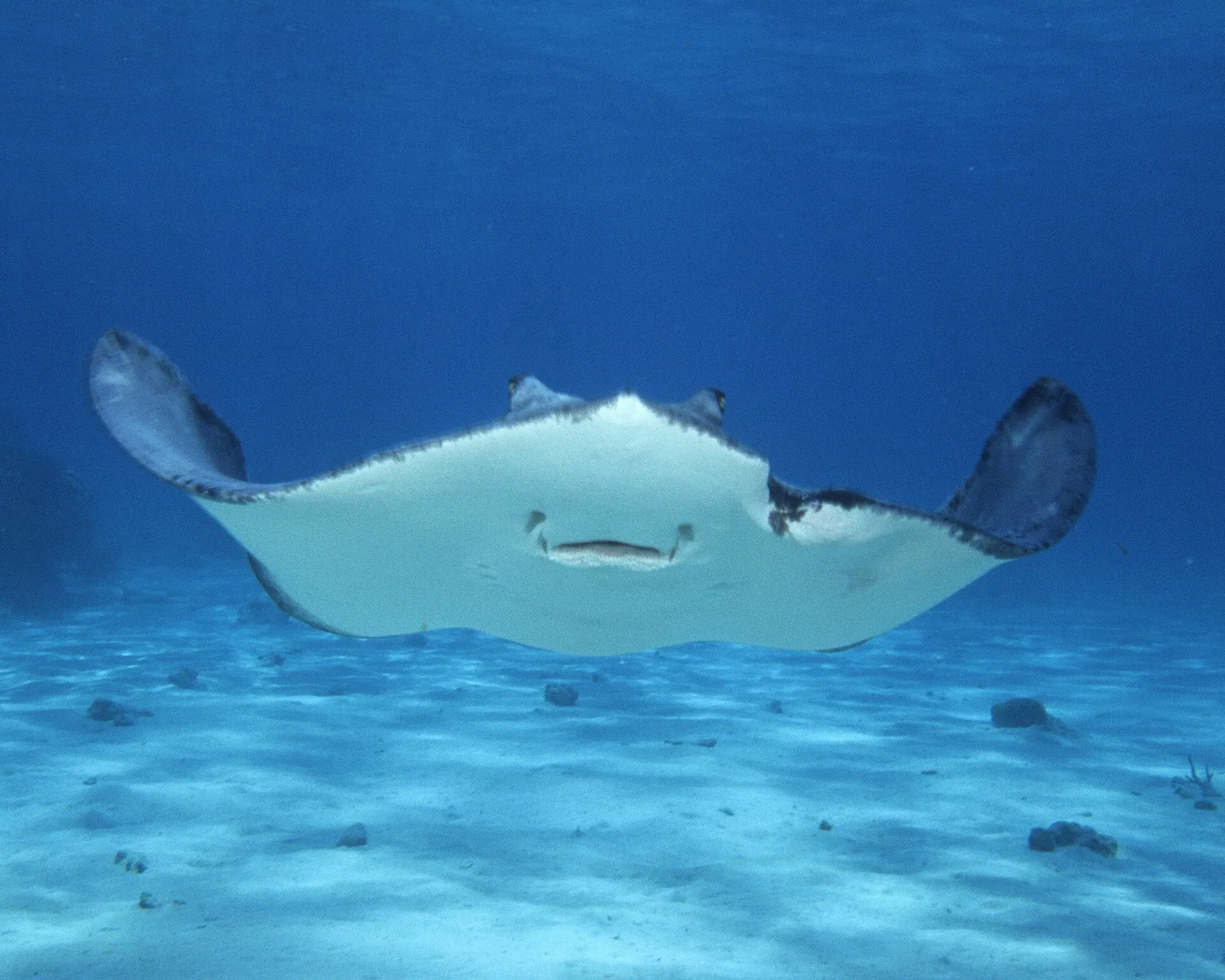
Most often reported: spotted eagle ray.
Sightings are likelihoods, not promises.
- Coral bleaching: 2016 (September-November): bleaching returned to the Caribbean, with the western Caribbean hit hardest1
- Protection: Marine parks first established 1986; network enlarged 2021 to cover around 50% of coastal waters2
- A spotted eagle ray, a Caribbean reef shark and a nurse shark were noted on dives at Little Cayman in one May visit3
- NOAA Coral Reef Watch, read 2026-11-22
- Cayman Islands Department of Environment, read 2026-11-22
- DAN Alert Diver (Little Cayman), read 2026-11-22 · read through a summary
When to go
Seasons are averages: weather in any one year can differ. Storm seasons come from the national or regional weather agency.
- Hurricane season: June 1 to November 30 (Atlantic basin, including the Caribbean Sea)1
- Wind and sea: North winds raise waves and turbidity on north-side sites; south side keeps good visibility2
- NOAA National Hurricane Center, read 2026-11-22
- Divers Alert Network (Alert Diver), read 2026-11-22
Getting there
- Nearest airport: Owen Roberts International, Grand Cayman (GCM); Sister Islands via Cayman Brac (CYB) or Little Cayman (LYB) by Twin Otter1
- Divers Alert Network (Alert Diver), read 2026-11-22
Conditions
- Visibility: 18–46 m / 60–150 ft1
- Divers Alert Network (Alert Diver), read 2026-11-22
Other facts
- Depth limit operator pref: 30 (100 ft) for recreational dives1
- Divers Alert Network (Alert Diver), read 2026-11-22
Cayman Islands in pictures
Dive sites
Bloody Bay Wall
Little Cayman West End
- Nassau groupers gather to spawn off western Little Cayman around full moons in winter; the aggregation grew from about 1,200 fish (2009) to over 7,000 (2018)3
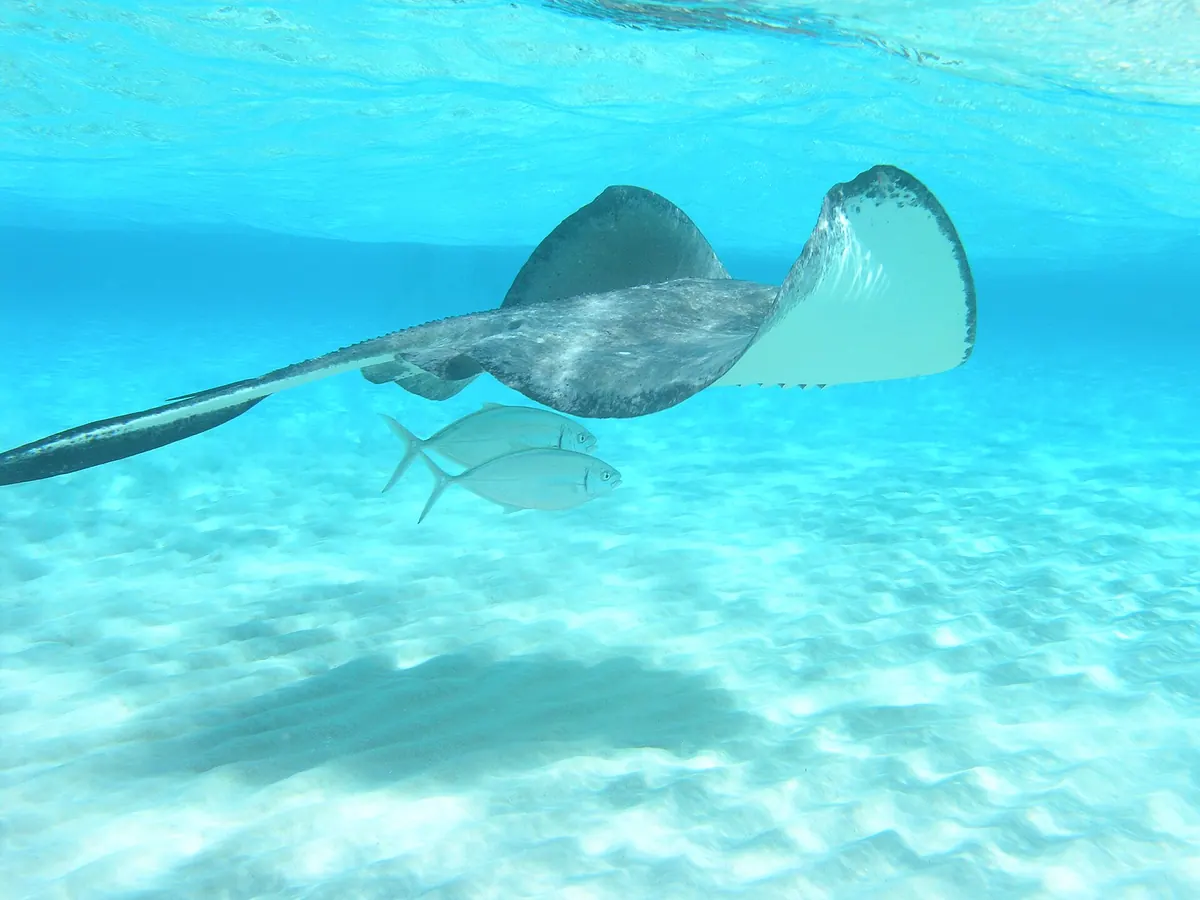
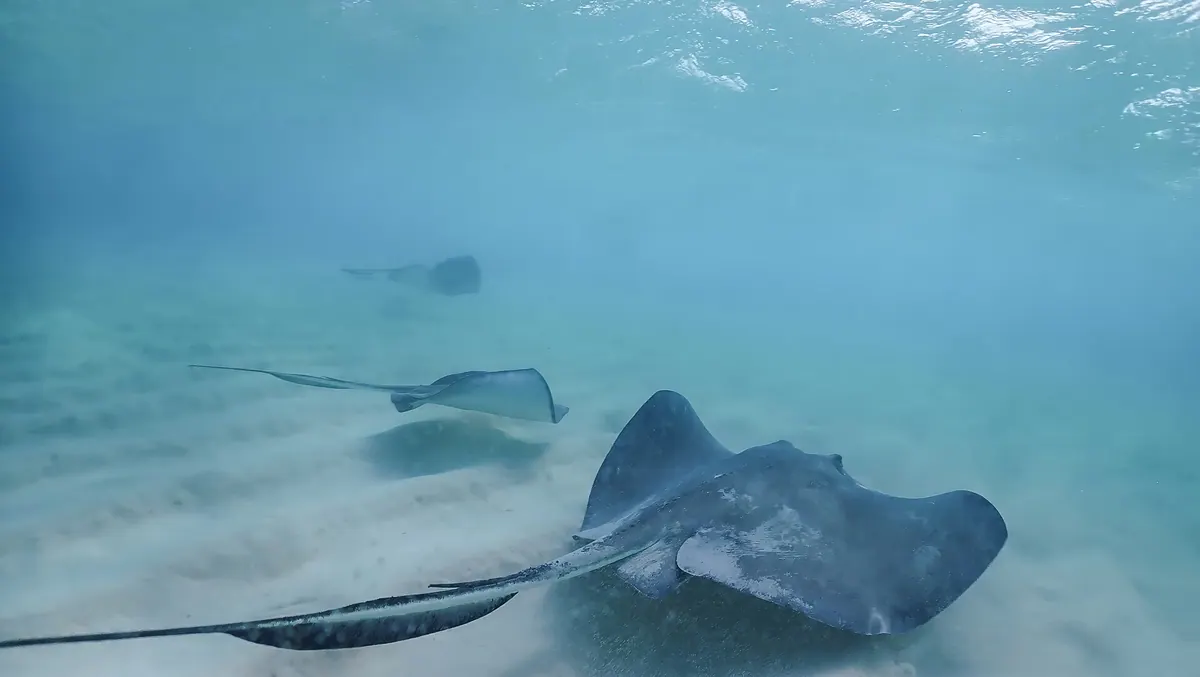
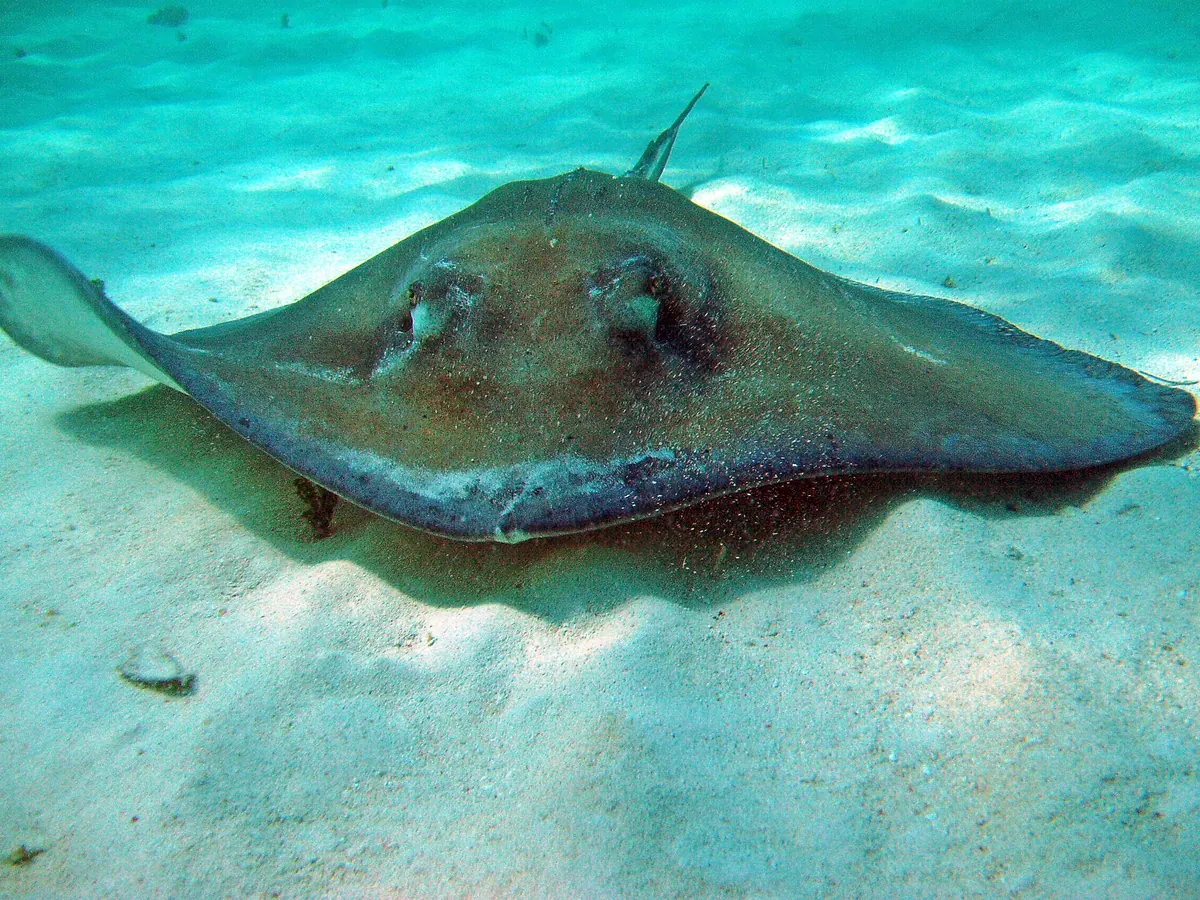
Stingray City
- Wildlife interaction zones: no footwear in water shallower than 4 ft; "wildlife interaction" means touching or feeding marine life4
- Divers Alert Network (Alert Diver), read 2026-11-22
- DAN Alert Diver (Little Cayman), read 2026-11-22 · read through a summary
- UC San Diego (Scripps) news, read 2026-11-22 · read through a summary
- Cayman Islands Government (SL 19 of 2021; copy hosted by cnslibrary.com), read 2026-11-22
Questions about diving in Cayman Islands
What are the marine park rules in the Cayman Islands?
Marine parks run from shore to the 150 ft depth contour unless stated. Outside a Wildlife Interaction Zone there is no wildlife interaction, such as fish feeding, and nobody may feed sharks or use food to attract them. Anchoring that damages coral is an offence anywhere in Cayman waters.
Is there a depth limit for diving in the Cayman Islands?
Not a legal one. Operators prefer to keep recreational dives to 30 m (100 ft), but that is not a legal limit or agency standard.
How good is visibility in the Cayman Islands?
Visibility at the Sister Islands is 18-46 m (60-150 ft). North winds raise waves and turbidity on north-side sites, and the south side keeps good visibility.
Where is the hyperbaric chamber on Grand Cayman?
The Cayman Islands Hospital (George Town Hospital) on Grand Cayman, where the Health Services Authority runs a chamber unit. No distances are given, so confirm access with DAN or an operator before travel.
Not found yet: what it costs, snorkelling and learning, an official diving level. We add facts once there is an official or published source. See every dive destination, or read about diving safety and how the site is paid for.