Diving in Malapascua
Sea temperatures of 27–30 °C (80–86 °F) through the year, and 16 facts from official sources, each with the date we read it. 6 more come from dive operators' and magazines' reports and say so.
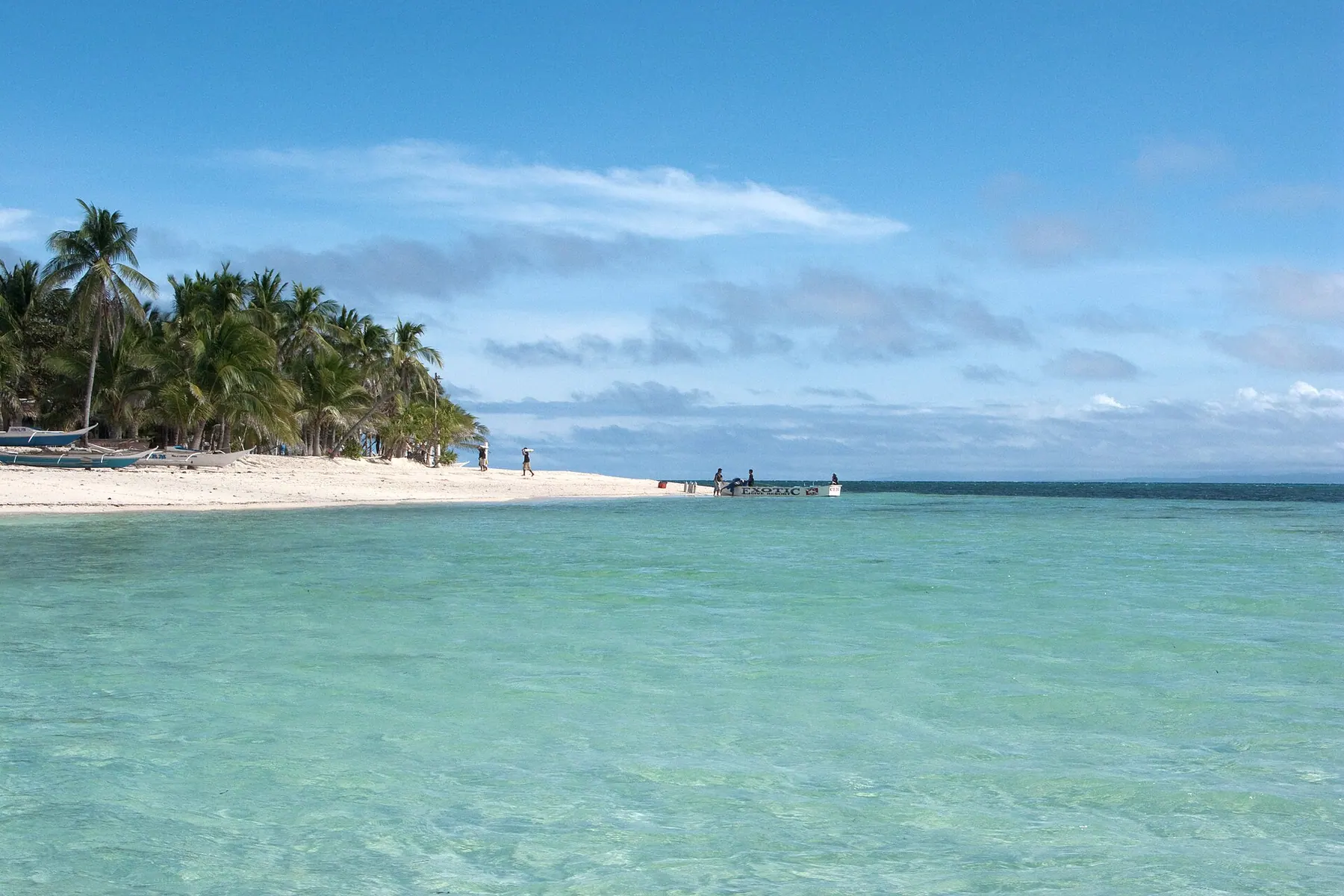
Overview
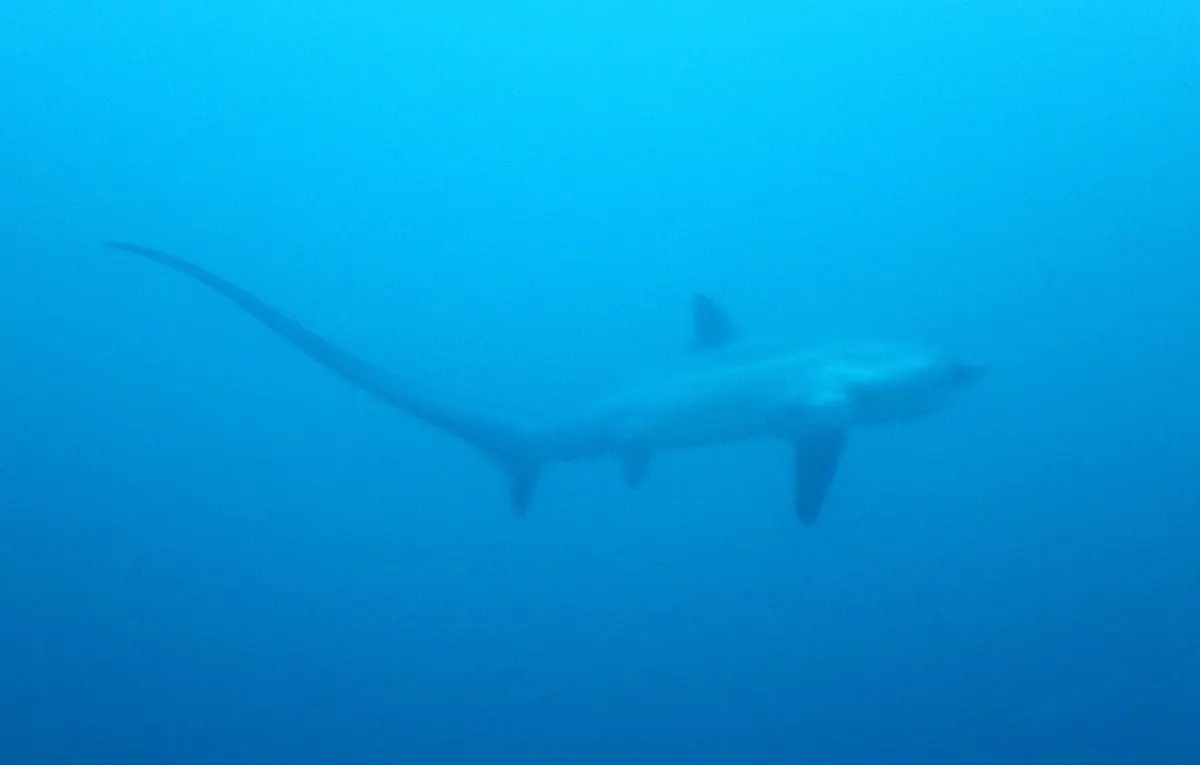
The dive that draws people to Malapascua starts at about 4 a.m. Thresher sharks are present year-round, though a sighting isn't guaranteed. After the pandemic they moved from Monad Shoal to Kimud Shoal, where pelagic threshers are now frequently found at 12-15 m (33-50 ft). That can change again. Tiger sharks are often seen at Monad Shoal, but encounters may be sporadic.
Beyond the sharks, the diving includes walls, wrecks, seamounts, pinnacles and macro, with Japanese shipwrecks named locally. Gato Island has at least five dive sites, including Whitetip Alley, The Guardhouse and Nudibranch City, with sleeping whitetip sharks and a protected sea snake breeding ground. Mandarinfish show at Lighthouse Reef around sunset, though they can hide.
Monad Shoal has been a marine protected area since 2002, and with Gato Island it became the Philippines' first shark and ray sanctuary in mid-2015. The protected area covers 0.7 sq mi (1.8 sq km) with a 500 m buffer zone, and Cebu penalises catching, possessing or trading any shark or ray there. A coast guard and sea patrol outpost at Gato Island deters illegal fishing.
The dry season, November to April, brings calm seas, with visibility best from late February to May. Water stays 27-29 °C (80-82 °F) all year. Jellyfish season runs June to September, and a full-length wetsuit is advised. Typhoon dates vary by source, from May to October or November. Currents are usually absent close to shore but moderate to strong at seamounts and offshore islands.
Summary drafted with AI from the sourced facts below; not yet reviewed by John R. Each figure here appears, with its source, further down the page.
Not yet checked by a person. Each fact shows its source: an official page, or a dive operator's or magazine's report where it says so. Rules and fees change: check with the authority and your dive operator before you go. In an emergency: DAN hotlines. How we check facts. Spotted a mistake? corrections@divehomebase.com.
- Sea temperature
- 26.9–29.9 °C / 80–86 °F
- NOAA OISST, monthly average 1991–2020
Sea temperature by month
Average sea surface temperature near Malapascua, 1991–2020. Deeper water and bays can be cooler. Best months for diving depend on more than temperature; we add them when a published source gives them.
- Jan27.0 °C / 81 °F
- Feb26.9 °C / 80 °F
- Mar27.6 °C / 82 °F
- Apr28.6 °C / 83 °F
- May29.5 °C / 85 °F
- Jun29.9 °C / 86 °F
- Jul29.5 °C / 85 °F
- Aug29.2 °C / 85 °F
- Sep29.3 °C / 85 °F
- Oct29.2 °C / 85 °F
- Nov28.7 °C / 84 °F
- Dec27.9 °C / 82 °F
Marine life and conservation
Most often reported: cuttlefish, nudibranchs.
Sightings are likelihoods, not promises.
- Protection: Monad Shoal marine protected area since 2002; Monad Shoal and Gato Island designated the Philippines’ first shark and ray sanctuary in mid-20151
- Thresher sharks present year-round (reported: all year)1
- Macro life around Malapascua; no months2
- Nudibranchs listed among macro life2
- Divers Alert Network, Alert Diver Q1 2025, "Malapascua", read 2026-11-23
- Bluewater Dive Travel, read 2026-11-22 · operator or magazine report
When to go
Best months: November to April.
Seasons are averages: weather in any one year can differ. Storm seasons come from the national or regional weather agency.
- Best months: November to April (dry season, calm Visayan Sea); visibility best late February to May1
- Cyclone season: May to November (western North Pacific, including the Philippines); storms can occur in any month2
- Cyclone season: Typhoons possible May to October (DAN); PAGASA basin-wide statement held earlier says May to November1
- Dry season: Cool dry season December-February; hot dry season March-May (country-wide)3
- Southwest monsoon (Habagat) May to September; northeast monsoon (Amihan) October to late March4
- Rainy season June to about November; dry season December to May (country-wide)4
- Rainy season: Northern Cebu is in the type with rainfall spread fairly evenly through the year4
- Water: 27-29 C (80-82 F) year-round1
- Divers Alert Network, Alert Diver Q1 2025, "Malapascua", read 2026-11-23
- PAGASA, read 2026-11-22
- PAGASA (Philippine Atmospheric, Geophysical and Astronomical Services Administration), "Climate of the Philippines", read 2026-11-23
- Philippine Institute for Development Studies (government research institute, summarising PAGASA), read 2026-11-22
Snorkelling and learning
- Snorkelling: Partly1
- Bluewater Dive Travel, read 2026-11-22 · operator or magazine report
Getting there
Route: Fly to Manila, connect to Mactan-Cebu, drive about four hours to Maya, then a 30-minute boat to….
- Route: Fly to Manila, connect to Mactan-Cebu, drive about four hours to Maya, then a 30-minute boat to Malapascua; last ferry from Maya Harbor before 5 p.m1
- Route: Maya wharf (Daanbantayan) is one of three major municipal wharves; Cebu Island town centre about 128 km from the provincial capitol2
- Divers Alert Network, Alert Diver Q1 2025, "Malapascua", read 2026-11-23
- Municipality of Daanbantayan, Cebu (official LGU website), read 2026-11-23
Conditions
Visibility 18–24 m / 60–80 ft; currents generally none at sites close to shore.
- Best months: November to April (dry season, calm Visayan Sea); visibility best late February to May1
- Currents: Generally none at sites close to shore; moderate to strong at seamounts and offshore islands1
- Usual deepest: 25 m / 82–90 ft2
- Diving: Japanese shipwrecks and thresher shark dives named by the municipality3
- Diving: Wall, wreck, seamount, pinnacle, macro1
- Hazards: June to September (jellyfish season, with hot sunny days and rainy late afternoons); full-length wetsuit advised1
- Visibility: 18–24 m / 60–80 ft2
- Divers Alert Network, Alert Diver Q1 2025, "Malapascua", read 2026-11-23
- Bluewater Dive Travel, read 2026-11-22 · operator or magazine report
- Municipality of Daanbantayan, Cebu (official LGU website), read 2026-11-23
Malapascua in pictures
Dive sites
Gato Island
Kimud Shoal
Lighthouse Reef
- Mandarinfish (Synchiropus splendidus) present at Lighthouse Reef; best around sunset1
Monad Shoal
- 20 m (top of the shoal) down to the seafloor at about 200 m1
- Tiger sharks (Galeocerdo cuvier) often seen at Monad Shoal, encounters may be sporadic1
- Thresher sharks at dawn at Monad Shoal cleaning stations; operators claim year-round, near-daily sightings; independent evidence is the ISRA/Frontiers records from 2026-11-20 run (reported all year)2
- Pelagic thresher shark (Alopias pelagicus), seen at cleaning stations; IUCN Endangered3
- Peer-reviewed paper (Frontiers 2025) already recorded 2026-11-20; kept here as the primary evidence link3
- Thresher sharks at Monad Shoal cleaning stations; a sighting is not guaranteed4
- Monad Shoal MPA: 0.7 sq mi (1.8 sq km) with a 500 m buffer zone; Cebu ordinance (2014 amendment) penalises catching, possessing and trading any shark or ray1
- Divers Alert Network, Alert Diver Q1 2025, "Malapascua", read 2026-11-23
- Bluewater Dive Travel (operator listing), read 2026-11-22 · operator or magazine report
- Frontiers in Marine Science (Gokgoz, read 2026-11-20
- Divers Alert Network (Alert Diver), read 2026-11-22
Questions about diving in Malapascua
Can you see thresher sharks in Malapascua all year?
They are described as present year-round, but a sighting isn't guaranteed. Threshers are now frequently found at Kimud Shoal in the early morning.
How do you get to Malapascua?
Fly to Manila, connect to Mactan-Cebu, drive about four hours to Maya, then take a 30-minute boat to the island. The last ferry leaves Maya Harbor before 5 p.m.
When is the best time to dive Malapascua?
November to April, in the dry season with calm seas. Visibility is best from late February to May. Christmas, Chinese New Year and Easter are crowded.
Are there jellyfish in Malapascua?
Jellyfish season runs June to September, and a full-length wetsuit is advised.
Not found yet: what it costs, an official diving level. We add facts once there is an official or published source. See every dive destination, or read about diving safety and how the site is paid for.