Diving in Raja Ampat
Sea temperatures of 28–29 °C (83–85 °F) through the year, and 6 facts from official sources, each with the date we read it. 13 more come from dive operators' and magazines' reports and say so.
Overview
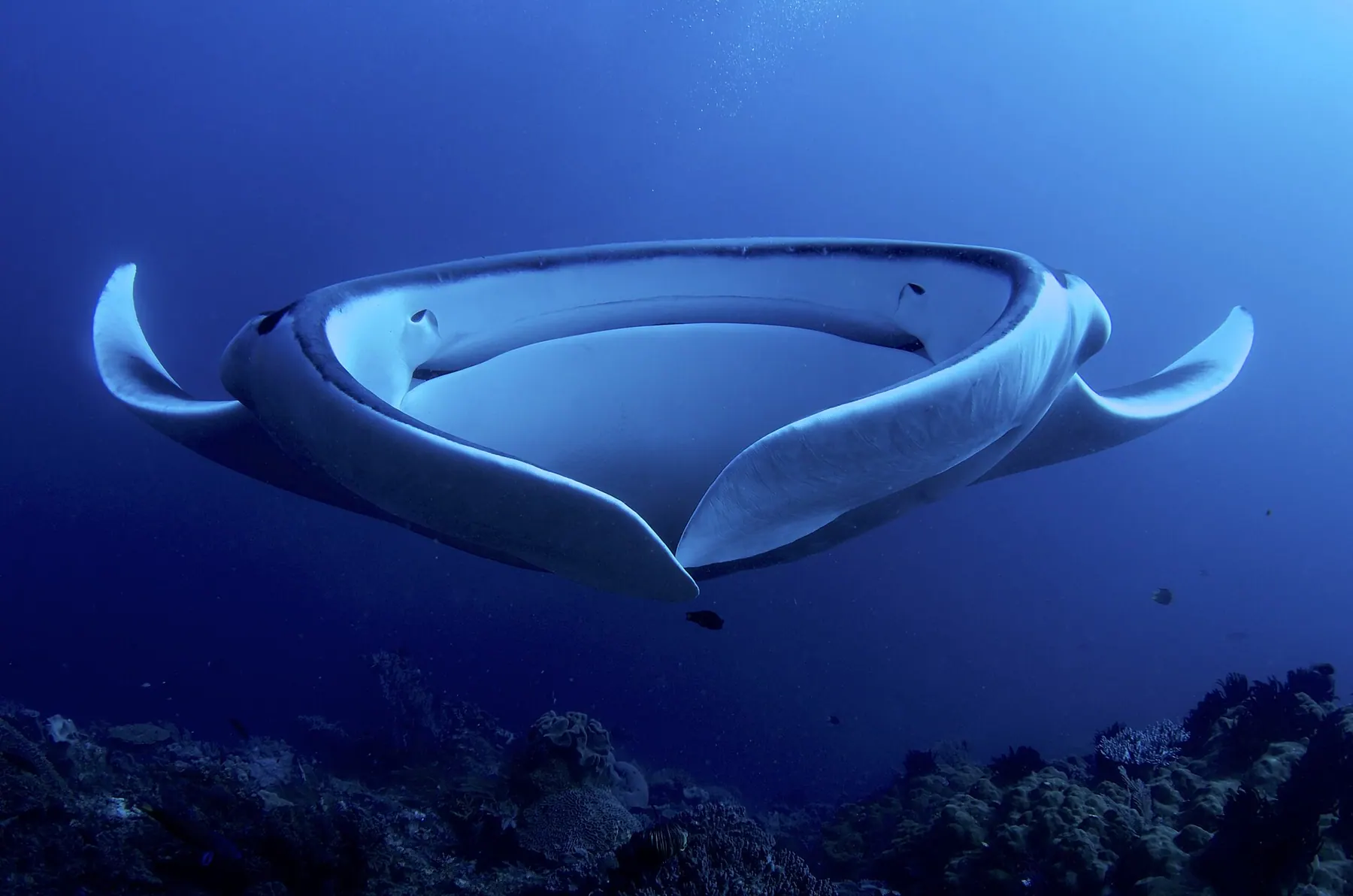
Raja Ampat holds Indonesia's largest reef manta population, with large seasonal feeding aggregations of up to 112 animals in Dampier Strait. Operators put peak manta season at roughly December to March, with mantas returning in October. Some say November to March.
October to April is usually named as the best time, the dry season with calmer seas. Whale sharks are possible in November and December. Wobbegongs, pygmy seahorses and walking sharks on certain night dives are among the highlights.
Diving is by liveaboard of 7 to 12 nights, or from a resort with a house reef and tender boats. Typical depths are 10 to 40 m (33 to 131 ft). Visibility is reportedly 20 to 30 m (66 to 98 ft) in the dry season and 10 to 15 m (33 to 49 ft) in July and August.
Of Raja Ampat's sea, 70 percent is conservation area, in a network of seven areas, according to the marine park authority. The authority also sells the marine park fee ticket online. Sea temperature stays between 28.5 °C (83 °F) in August and 29.4 °C (85 °F) in November.
Summary drafted with AI from the sourced facts below; not yet reviewed by John R. Each figure here appears, with its source, further down the page.
Not yet checked by a person. Each fact shows its source: an official page, or a dive operator's or magazine's report where it says so. Rules and fees change: check with the authority and your dive operator before you go. In an emergency: DAN hotlines. How we check facts. Spotted a mistake? corrections@divehomebase.com.
- Sea temperature
- 28.5–29.4 °C / 83–85 °F
- NOAA OISST, monthly average 1991–2020
Sea temperature by month
Average sea surface temperature near Raja Ampat, 1991–2020. Deeper water and bays can be cooler. Best months for diving depend on more than temperature; we add them when a published source gives them.
- Jan29.0 °C / 84 °F
- Feb28.9 °C / 84 °F
- Mar29.1 °C / 84 °F
- Apr29.3 °C / 85 °F
- May29.3 °C / 85 °F
- Jun29.0 °C / 84 °F
- Jul28.6 °C / 84 °F
- Aug28.5 °C / 83 °F
- Sep28.7 °C / 84 °F
- Oct29.1 °C / 84 °F
- Nov29.4 °C / 85 °F
- Dec29.3 °C / 85 °F
Fees and permits
BLUD UPTD Pengelolaan KKP Kepulauan Raja Ampat, main office Jl. Yos Sudarso, Waisai, Raja Ampat, Papua Barat….
- Set by: BLUD UPTD Pengelolaan KKP Kepulauan Raja Ampat, main office Jl. Yos Sudarso, Waisai, Raja Ampat, Papua Barat Daya 98482; open Mon-Fri 08:00-16:00; sells tourism, research, mooring and sport-fishing tickets online (the marine park fee, TLPJL)1
- Visitors in 2026: 12460 foreign visitors, 194 Indonesian visitors, 0 researchers2
- BLUD UPTD Pengelolaan KKP Kepulauan Raja Ampat (official, copyright 2026), read 2026-11-20
- BLUD UPTD Pengelolaan KKP Kepulauan Raja Ampat, read 2026-11-20
Marine life and conservation
Most often reported: whale shark (Nov–Dec), reef manta (Nov–Mar), wobbegong sharks (all year).
Sightings are likelihoods, not promises.
- Protection: Authority states 70 percent of Raja Ampat's sea is conservation area; it manages 1,657,236.82 ha of the 2.3 million ha of conservation waters; seven areas in its network1
- Protection: Marine protected area of 7 areas (Ayau-Asia, Mayalibit Bay, Dampier Strait, Misool, Kofiau-Boo, Fam, North Misool); managed by the Papua Barat Daya provincial marine department2
- Protection: Raja Ampat network of nine marine protected areas covering nearly two million hectares3
- Whale sharks may appear in November and December (seen at times: Nov–Dec)4
- Indonesia's largest reef manta population; Dampier Strait and SE Misool populations increased over a decade3
- Wobbegongs listed as a highlight; Divernet calls them present year-round (reported all year)5
- Manta season from November to March, the most popular time to visit; plankton blooms draw mantas to cleaning and feeding sites (most often seen: Nov–Mar)6
- Pygmy seahorses are a highlight; months not stated (macro critters said to be abundant in May)5
- Walking (epaulette) sharks on certain night dives; months not stated5
- BLUD UPTD Pengelolaan KKP Kepulauan Raja Ampat, read 2026-11-20
- BLUD UPTD Pengelolaan KKP Kepulauan Raja Ampat, read 2026-11-20
- Frontiers in Marine Science (Setyawan et al. 2022), read 2026-11-22
- Bluewater Dive Travel (Raja Ampat dive season), read 2026-11-22 · operator or magazine report
- Bluewater Dive Travel (Raja Ampat diving), read 2026-11-22 · operator or magazine report
- Divernet (sponsored content), read 2026-11-22 · operator or magazine report
When to go
Seasons are averages: weather in any one year can differ. Storm seasons come from the national or regional weather agency.
- Best months: Oct-Apr (dry season, calmer seas); mantas more often seen from October1
- Bluewater Dive Travel (agent), read 2026-11-22 · operator or magazine report
Snorkelling and learning
- Snorkelling: Partly1
- Divernet (sponsored content), read 2026-11-22 · operator or magazine report
Conditions
Visibility 15–25 m / 49–82 ft.
- Access: Liveaboard (7-12 nights) or resort with house reef and tender boats1
- Best months: Oct-Apr (dry season, calmer seas); mantas more often seen from October2
- Usual depths: 10–40 m / 33–131 ft1
- Diving: Boat, liveaboard1
- Visibility: 15–25 m / 49–82 ft2
- Visibility: 20–30 m / 66–98 ft2
- Visibility: 10–15 m / 33–49 ft2
- Bluewater Dive Travel, read 2026-11-22 · operator or magazine report
- Bluewater Dive Travel (agent), read 2026-11-22 · operator or magazine report
Raja Ampat in pictures

Dive sites
Dampier Strait
- Reef mantas seen across Dampier Strait and SE Misool; large seasonal feeding aggregations of up to 112 animals in Dampier Strait; fewer detections at Manta Ridge in second half of 2015, more in west Waigeo (reported all year)1
Manta Sandy
- Peak manta season roughly December to March, strong activity at Manta Sandy (Dampier Strait) and Misool cleaning stations; mantas return in October, fewer in September (most often seen: Dec–Mar)2
Wayag
- Juvenile reef manta nursery at Wayag Lagoon: 34 juveniles, 47 sightings 2013-2021; tagged juveniles often undetected for weeks around end of March to early May, linked by authors to foraging in nearby productive water as the northwest monsoon ends3
- Frontiers in Marine Science (Setyawan et al., 2022), read 2026-11-22 · read through a summary
- Bluewater Dive Travel (Raja Ampat dive season), read 2026-11-22 · operator or magazine report
- Frontiers in Marine Science (Setyawan et al.), read 2026-11-20
Questions about diving in Raja Ampat
When is manta season in Raja Ampat?
Operators give slightly different windows: roughly December to March, with mantas returning in October, or November to March. Sightings are not guaranteed.
How do you dive Raja Ampat?
By liveaboard of 7 to 12 nights, or from a resort with a house reef and tender boats.
What is the visibility in Raja Ampat?
Reportedly 20 to 30 m (66 to 98 ft) in the dry season, about October to April, and 10 to 15 m (33 to 49 ft) in July and August.
Where do you buy the Raja Ampat marine park ticket?
From the marine park authority, which sells tourism, research, mooring and sport-fishing tickets online, including the marine park fee. Its main office is on Jl. Yos Sudarso, Waisai.
Not found yet: getting there, what it costs, an official diving level. We add facts once there is an official or published source. See every dive destination, or read about diving safety and how the site is paid for.