Diving in Seychelles
Sea temperatures of 26–30 °C (79–86 °F) through the year, and 4 facts from official sources, each with the date we read it.
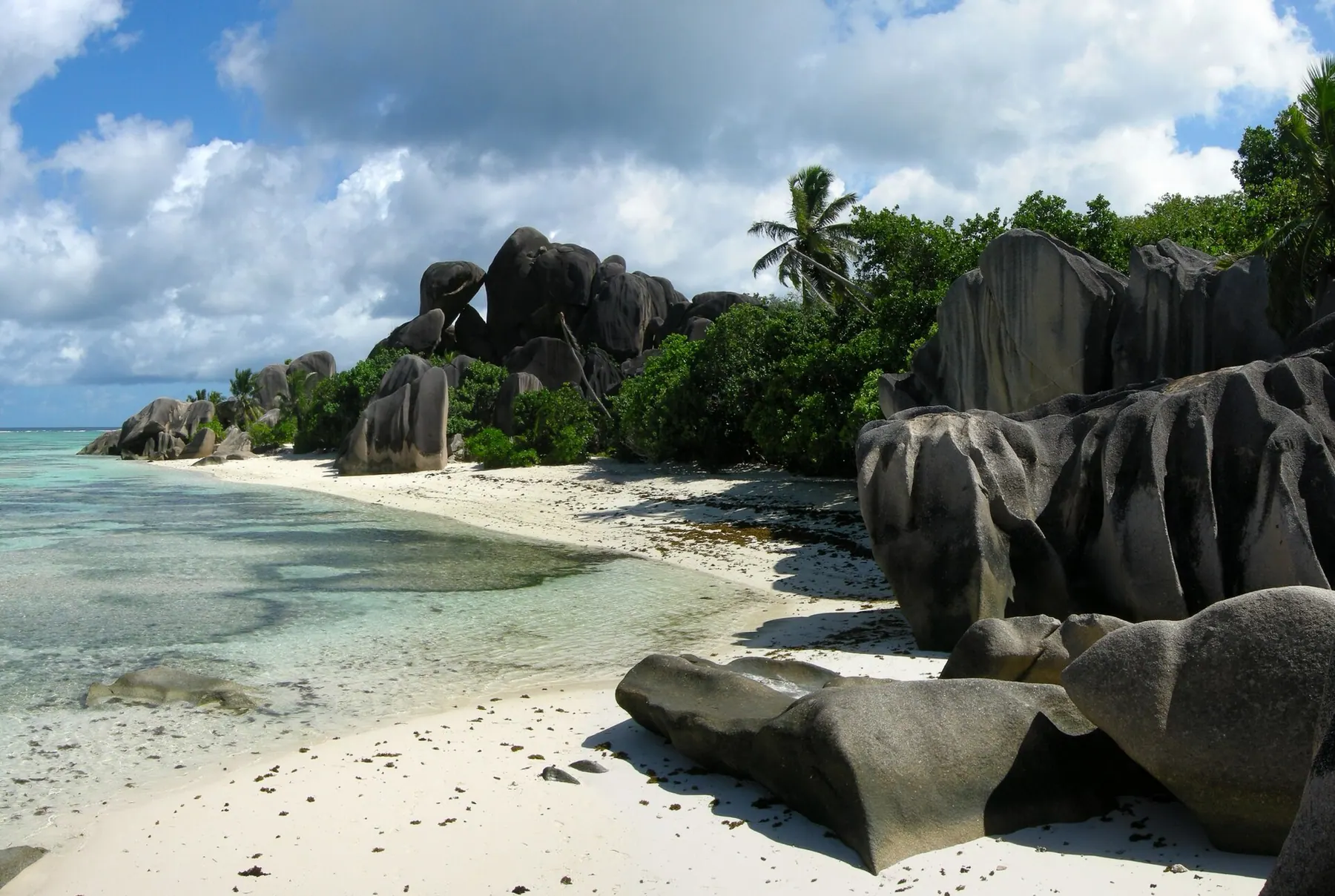
Overview
Coral cover is the first thing to know about Seychelles reefs. Live hard coral cover averaged about 14% nationally in 2025, after falling sharply in 2016-2017 with severe bleaching. Major heat stress struck in 1998, 2010, 2016, 2019, 2020, 2024 and 2025, and 2024 was the most severe year on record. Deeper, structurally complex reefs show the most capacity to recover, in the 2026 status assessment.
Whale sharks gather off Mahe's west coast in the late southeast monsoon, according to a local conservation charity. Monitoring and eco-tours from Beau Vallon run from 1 August to 31 October, though other months are sometimes mentioned and sightings vary.
Marine park entry costs SCR 200 per non-resident over 12 at Sainte Anne, Baie Ternay and Port Launay, and SCR 300 at Curieuse. Fees are paid by card only. Sainte Anne is open seven days a week, 9 a.m. to 5 p.m. The park authority shows no effective date for these fees, so check before travel.
Water runs from 26.1 °C (79 °F) in August to 29.8 °C (86 °F) in April.
Summary drafted with AI from the sourced facts below; not yet reviewed by John R. Each figure here appears, with its source, further down the page.
Not yet checked by a person. Each fact shows its source: an official page, or a dive operator's or magazine's report where it says so. Rules and fees change: check with the authority and your dive operator before you go. In an emergency: DAN hotlines. How we check facts. Spotted a mistake? corrections@divehomebase.com.
- Sea temperature
- 26.1–29.8 °C / 79–86 °F
- NOAA OISST, monthly average 1991–2020
Sea temperature by month
Average sea surface temperature near Seychelles, 1991–2020. Deeper water and bays can be cooler. Best months for diving depend on more than temperature; we add them when a published source gives them.
- Jan28.4 °C / 83 °F
- Feb28.7 °C / 84 °F
- Mar29.4 °C / 85 °F
- Apr29.8 °C / 86 °F
- May29.2 °C / 84 °F
- Jun27.4 °C / 81 °F
- Jul26.3 °C / 79 °F
- Aug26.1 °C / 79 °F
- Sep27.0 °C / 81 °F
- Oct27.8 °C / 82 °F
- Nov28.2 °C / 83 °F
- Dec28.3 °C / 83 °F
Rules for divers
Set by the park or national authority. Breaking them can mean fines or losing your dive permit.
- Entrance fees on site payable by debit/credit card only; cash only at SPGA main office accounts section1
- Seychelles Parks and Gardens Authority (SPGA), read 2026-11-20
Marine life and conservation
Sightings are likelihoods, not promises.
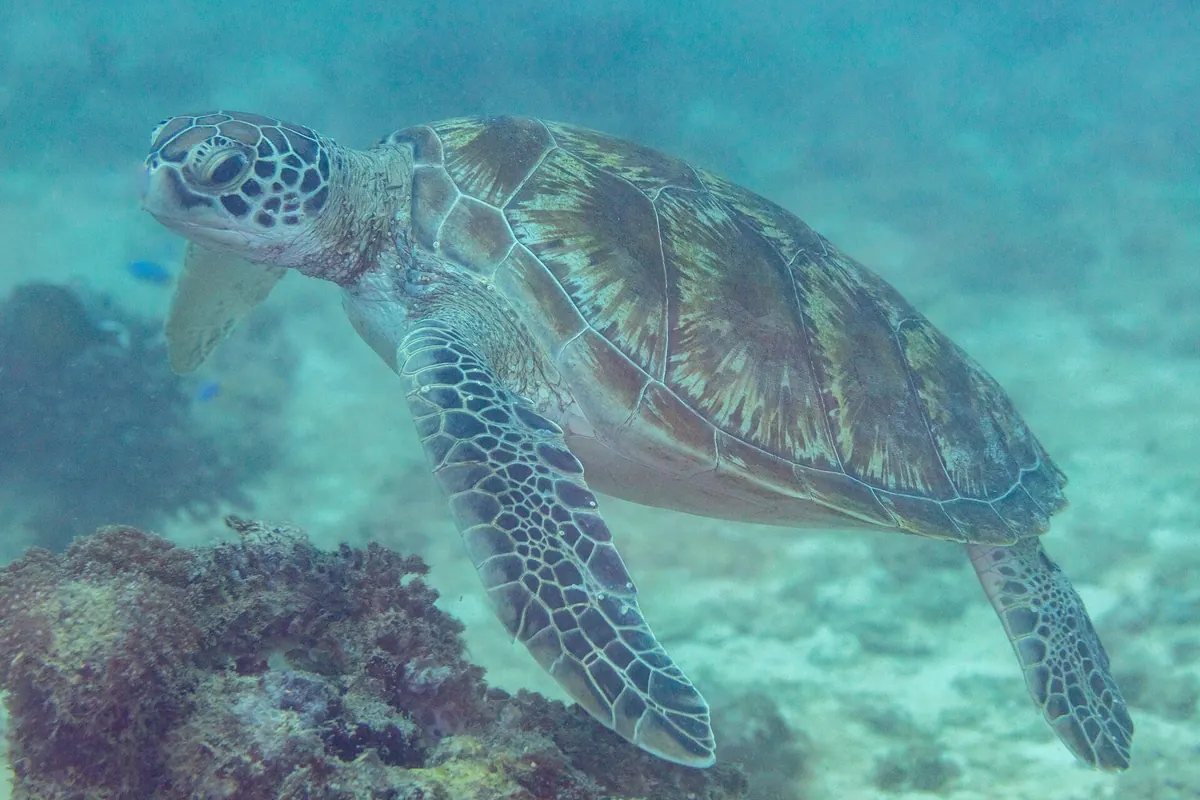
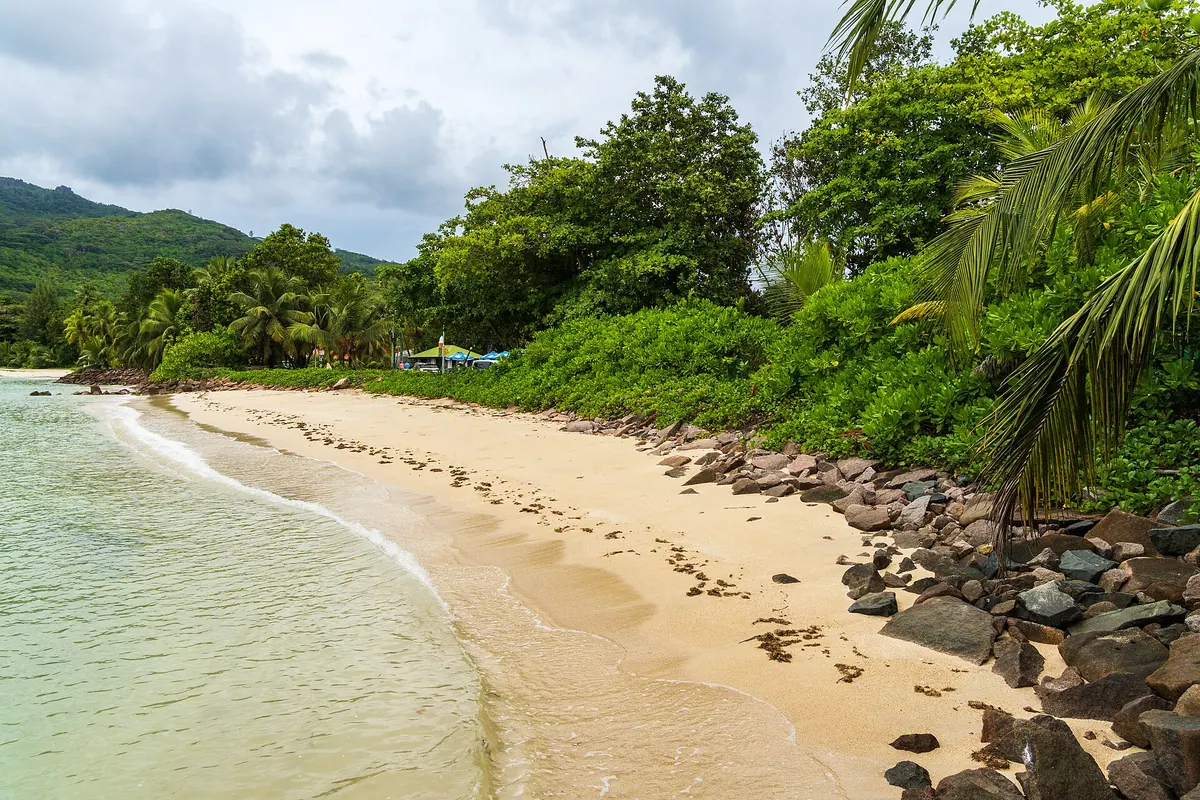
Seychelles in pictures
Dive sites
Beau Vallon
- MCSS whale shark monitoring programme and eco-tours from Beau Vallon run 1 August to 31 October (reported: Aug–Oct)1
- Whale sharks gather off Mahe's west coast in the late southeast monsoon; the Marine Conservation Society Seychelles monitors them from 1 August to 31 October (most often seen: Aug–Oct)1
Cousin Island
- Hawksbills nest on Cousin Island, roughly October to March, one of the longest-running monitoring programmes in the world; nesting is on beaches, not a dive sighting (regularly seen: Oct–Mar)2
Curieuse
- Park fee: 300 SCR (Curieuse marine park, SCR (Rs) per non-resident over 12)3
- Marine Conservation Society Seychelles (NGO), read 2026-11-22 · operator or magazine report
- Nature Seychelles (via search summary and cousineisland.com), read 2026-11-22 · operator or magazine report
- Seychelles Parks and Gardens Authority (SPGA), read 2026-11-20
- Seychelles Parks and Gardens Authority, read 2026-11-22
Questions about diving in Seychelles
How much is the marine park fee in Seychelles?
Entry is SCR 200 for non-residents over 12 at Sainte Anne, Baie Ternay and Port Launay, and SCR 300 at Curieuse. Pay by card on site. No effective date is shown, so check before travel.
When can you see whale sharks in Seychelles?
They gather off Mahe's west coast from 1 August to 31 October, the window of a local monitoring programme. Other months are sometimes mentioned, and sightings aren't guaranteed.
What is the coral like in Seychelles?
Live hard coral cover was about 14% nationally in 2025, after severe bleaching in 2016-2017. Deeper, structurally complex reefs show the most capacity to recover.
Not found yet: when to go, getting there, what it costs, snorkelling and learning, an official diving level. We add facts once there is an official or published source. See every dive destination, or read about diving safety and how the site is paid for.