Diving in Jamaica
Sea temperatures of 27–30 °C (80–86 °F) through the year, and 23 facts from official sources, each with the date we read it.
Overview
Scuba divers in Jamaica's marine parks must buy a permit from a licensed operator or the park manager and wear its identification tag. Boat captains who knowingly carry a diver without one commit an offence. The rule was added to the Marine Parks Regulations by a later amendment, so check it is still in force before relying on it.
Montego Bay Marine Park dates from 1992, Negril Marine Park from 1998, and Ocho Rios Marine Park from 1998 or 1999, since sources differ. In a park, divers may not remove or break coral, sea fans or shells, tie rope to coral or rock, or fish without the manager's written permission. Spear guns and harpoons are banned.
Reefs here are under pressure. A 2013 national survey of 23 sites rated 70% poor, 26% critical and 4% fair, with none good. Hard coral cover averaged 20.3%, and was highest at Channel Edge, at 36.9%.
The sea is warm all year, averaging 27 °C (80 °F) in February and 30 °C (86 °F) in September. The wet season runs April to October, and the Atlantic hurricane season runs from June 1 to November 30, usually peaking August to October.
The nearest chamber is at the University of the West Indies Discovery Bay Marine Laboratory, in Discovery Bay, St Ann. Phone first to confirm it is staffed.
Summary drafted with AI from the sourced facts below; not yet reviewed by John R. Each figure here appears, with its source, further down the page.
Not yet checked by a person. Each fact shows its source: an official page, or a dive operator's or magazine's report where it says so. Rules and fees change: check with the authority and your dive operator before you go. In an emergency: DAN hotlines. How we check facts. Spotted a mistake? corrections@divehomebase.com.
- Sea temperature
- 26.9–29.8 °C / 80–86 °F
- NOAA OISST, monthly average 1991–2020
- Recompression chamber
- Chamber uses oxygen or Nitrox with advanced life-support capability for serious dive accidents
- UWI Mona, Centre for Marine Sciences (Discovery Bay Marine Laboratory), read 2026-11-23
Sea temperature by month
Average sea surface temperature near Jamaica, 1991–2020. Deeper water and bays can be cooler. Best months for diving depend on more than temperature; we add them when a published source gives them.
- Jan27.2 °C / 81 °F
- Feb26.9 °C / 80 °F
- Mar26.9 °C / 80 °F
- Apr27.5 °C / 82 °F
- May28.2 °C / 83 °F
- Jun28.6 °C / 84 °F
- Jul29.0 °C / 84 °F
- Aug29.4 °C / 85 °F
- Sep29.8 °C / 86 °F
- Oct29.4 °C / 85 °F
- Nov28.6 °C / 84 °F
- Dec27.9 °C / 82 °F
Fees and permits
Scuba divers must buy a marine-park permit.
Rules for divers
Among them: Mooring permit for a buoy inside a marine park; and 4 more below.
Set by the park or national authority. Breaking them can mean fines or losing your dive permit.
- No spear guns, harpoons or other weapons harmful to fish or the reef in a marine park1
- No removing, breaking or harmfully disturbing coral, sea fans, shells or other marine invertebrates in a marine park1
- No fishing in a marine park without the park manager's written permission1
- Mooring permit for a buoy inside a marine park; licensed scuba operators and snorkelling facilities are exempt from the mooring fee1
- No tying or attaching rope or wire to coral or rock in a marine park1
Marine life and conservation
Sightings are likelihoods, not promises.
- Coral bleaching: 2016 (September-November): bleaching returned to the Caribbean, with the western Caribbean hit hardest1
- Protection: Portland Bight Protected Area declared by an Order dated 19992
- Protection: Ocho Rios Marine Park Protected Area Order, filed as 19993
- Protection: Negril Marine Park declared by the Natural Resources Conservation (Negril Marine Park) (Declaration) Order 19984
- Protection: Montego Bay Marine Park created by Natural Resources (Montego Bay Marine Park) Order 19922
- Reef health: Overall hard coral average 20.3% across the sites surveyed in 20135
- Reef health: 2013 survey of 23 reef sites: 70% poor, 26% critical, 4% fair, none good or very good5
- Reef health: Montego Bay Marine Park and Negril Marine Park showed more herbivorous and commercial fish in 2013 than in 2011, but still critical to poor5
- Reef health: Highest hard coral cover recorded 36.9% at Channel Edge (Sandals Boscobel Special Fishery Conservation Area); lowest 5.6%5
- NOAA Coral Reef Watch, read 2026-11-22
- NEPA Jamaica (National Environment and Planning Agency), read 2026-11-23
- NEPA Jamaica, read 2026-11-23
- NEPA Jamaica, read 2026-11-23
- NEPA Jamaica, Coral Reefs of Jamaica: An Evaluation of Ecosystem Health 2013, read 2026-11-23
When to go
Wet season April to October.
Seasons are averages: weather in any one year can differ. Storm seasons come from the national or regional weather agency.
Jamaica in pictures
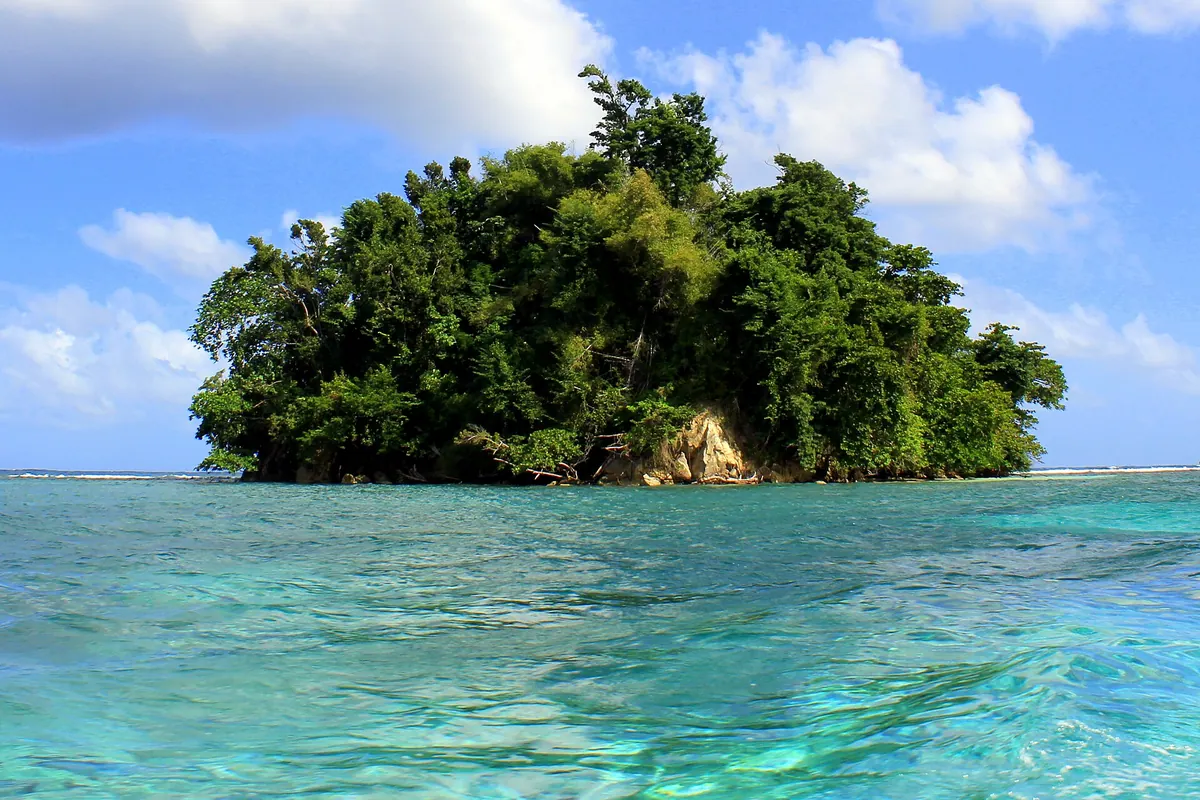
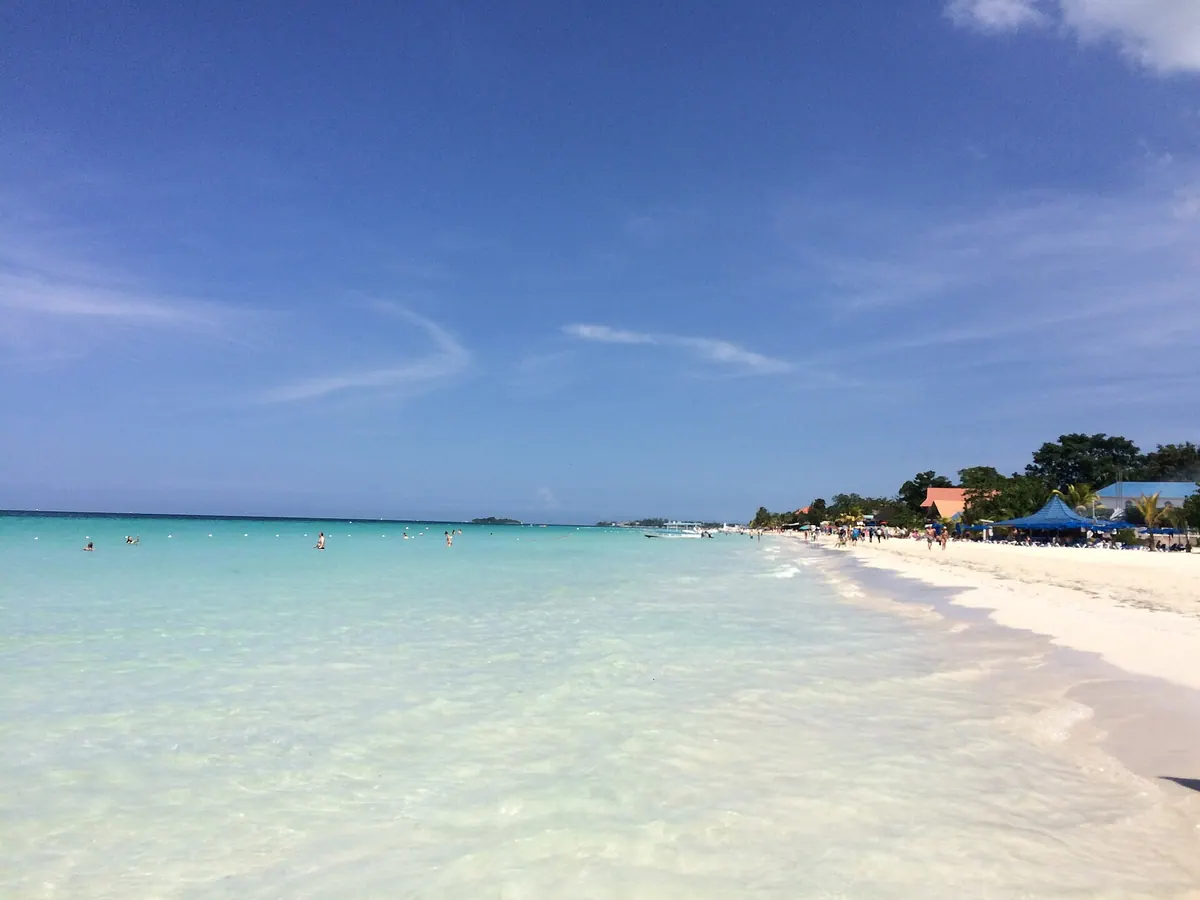
Dive sites
Doctors Cave Reef
- Dive sites: Doctor's Cave Reef and Secrets Reef named by the Jamaica Tourist Board as snorkelling spots in Montego Bay1
- Jamaica Tourist Board (visitjamaica.com), read 2026-11-23
Questions about diving in Jamaica
Do you need a permit to scuba dive in Jamaica's marine parks?
Yes. Scuba divers must buy a marine-park permit from a licensed operator or the park manager and wear its identification tag. Check that the rule is still in force before you travel.
What are the rules in Jamaica's marine parks?
No removing or breaking coral, sea fans or shells, no tying rope to coral or rock, no spear guns, and no fishing without the park manager's written permission.
Where is the nearest decompression chamber in Jamaica?
At the University of the West Indies Discovery Bay Marine Laboratory, in Discovery Bay, St Ann. Phone first to confirm it is staffed.
Not found yet: getting there, what it costs, snorkelling and learning, an official diving level. We add facts once there is an official or published source. See every dive destination, or read about diving safety and how the site is paid for.