Diving in Bonaire
Sea temperatures of 26–29 °C (80–84 °F) through the year, and 30 facts from official sources, each with the date we read it. 9 more come from dive operators' and magazines' reports and say so.
Overview
Bonaire's marine park covers all waters around the island and Klein Bonaire, from the high-tide mark down to 60 m (200 ft), about 27 km2. It was established in 1979. STINAPA, which manages it for the island government, counts 88 dive sites.
Every park user needs a Nature Fee tag. It costs 40 USD and is valid for the calendar year, 1 January to 31 December, so a one-week diver pays it once. The park requires an orientation dive with a dive operator on arrival. Gloves and knee pads are not allowed, with medical exceptions on request. Touching, moving or feeding marine life is banned, including for photos. STINAPA also asks for reef-safe sunscreen free of oxybenzone and octinoxate.
East coast diving is limited to advanced divers, and the park recommends an experienced guide. The west coast has no stated level, but good buoyancy control is expected. Easterly trade winds blow all year, moderate to fresh and sustained.
Stony coral tissue loss disease was first documented on Bonaire in March 2023. The park runs a stoplight map: dive green sites first, then yellow, then red, and move in that order only. Some sites are temporarily closed, and diving is closed in the Queen Maxima and King Willem-Alexander reserves. Bleaching in 2023 peaked in November, mainly in Orbicella and Agaricia corals.
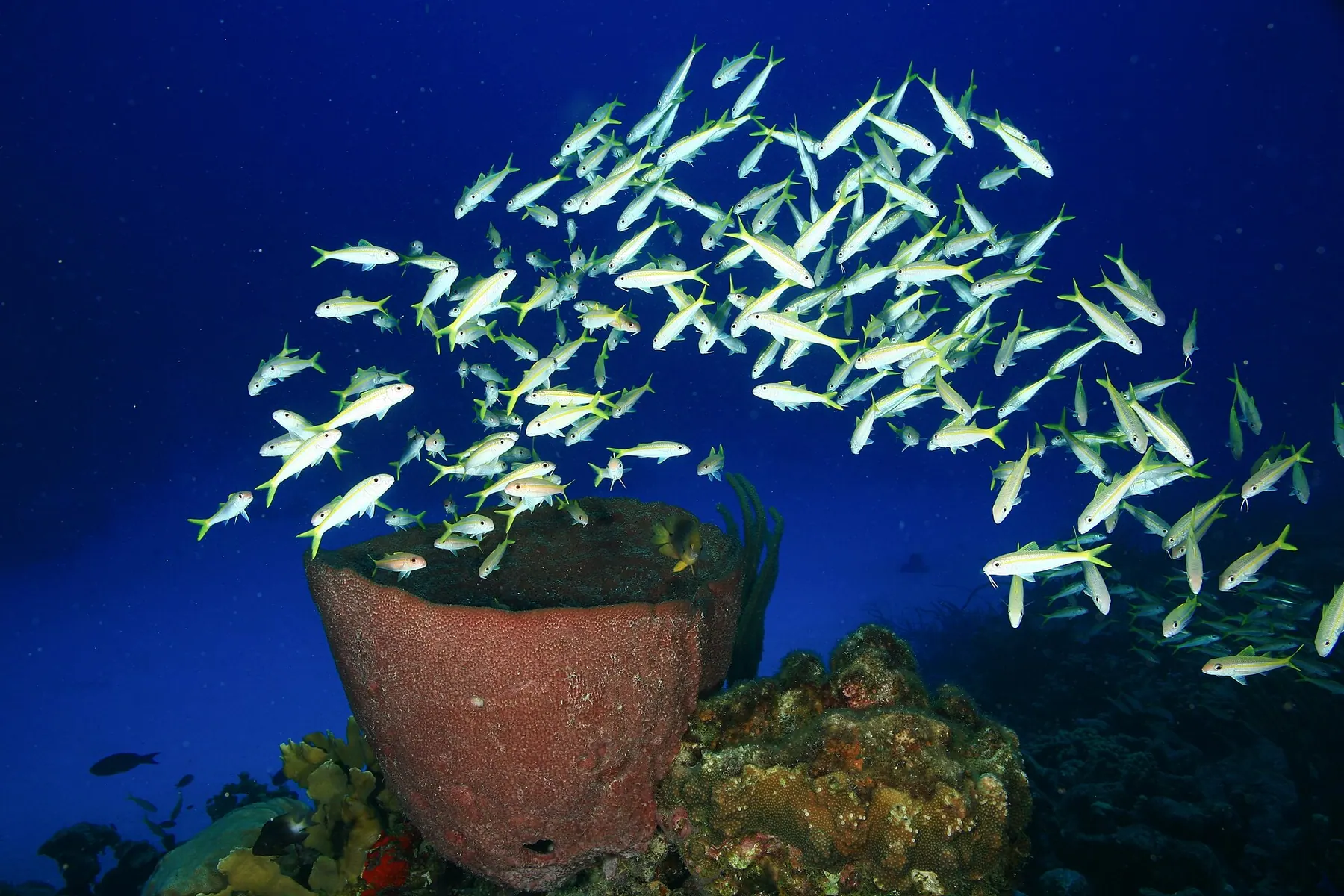
Frogfish are a signature small find, and three seahorse species are commonly met. Tarpon appear around the island, especially on night dives. Green and hawksbill turtles are reported on reefs all year. Sea temperature runs from 26.5 °C (80 °F) in February and March to 28.8 °C (84 °F) in September and October.
Summary drafted with AI from the sourced facts below; not yet reviewed by John R. Each figure here appears, with its source, further down the page.
Not yet checked by a person. Each fact shows its source: an official page, or a dive operator's or magazine's report where it says so. Rules and fees change: check with the authority and your dive operator before you go. In an emergency: DAN hotlines. How we check facts. Spotted a mistake? corrections@divehomebase.com.
- Park fee
- 40 USD (One price for divers and non-divers; valid one calendar year (1 Jan to 31 Dec))
- STINAPA (Bonaire National Marine Park), read 2026-11-22
- Level
- East coast: advanced divers with an experienced guide; west coast: no level stated by the park
- STINAPA (Bonaire National Marine Park), read 2026-11-22
- Sea temperature
- 26.5–28.8 °C / 80–84 °F
- NOAA OISST, monthly average 1991–2020
- Recompression chamber
- Recompression chamber run by Foundation Recompression Chamber Bonaire; hospital contact is St Francisco Hospital, Kralendijk
- Foundation Recompression Chamber Bonaire (chamber's own site), read 2026-11-20
Sea temperature by month
Average sea surface temperature near Bonaire, 1991–2020. Deeper water and bays can be cooler. Best months for diving depend on more than temperature; we add them when a published source gives them.
- Jan26.8 °C / 80 °F
- Feb26.5 °C / 80 °F
- Mar26.5 °C / 80 °F
- Apr26.8 °C / 80 °F
- May27.3 °C / 81 °F
- Jun27.6 °C / 82 °F
- Jul27.8 °C / 82 °F
- Aug28.4 °C / 83 °F
- Sep28.8 °C / 84 °F
- Oct28.8 °C / 84 °F
- Nov28.5 °C / 83 °F
- Dec27.7 °C / 82 °F
Fees and permits
Divers pay 40 USD.
- Valid for: One calendar year, 1 January to 31 December1
- Who doesn't pay: Residents of Aruba, Bonaire, Curacao, Sint Maarten, Sint Eustatius, Saba (ID) and children under 131
- Covers: Marine park covers all waters around Bonaire and Klein Bonaire from the high-tide mark to 60 m (200 ft) depth, about 27 km2; established 1979; managed by STINAPA for the island government2
- Valid for: Calendar year (Jan-Dec); 2026 period opened 16 Dec (per BES Reporter)3
- Nature Fee tag required for all marine park users3
- STINAPA (Bonaire National Marine Park), read 2026-11-22
- STINAPA Bonaire nature fee portal, read 2026-11-20
- STINAPA Bonaire, read 2026-11-20
Rules for divers
Among them: no gloves or knee pads; good buoyancy control expected; mandatory orientation dive on arrival; and 7 more below.
Set by the park or national authority. Breaking them can mean fines or losing your dive permit.
- Reef-safe sunscreen free of oxybenzone and octinoxate; surface marker buoy recommended1
- No gloves or knee pads (medical exceptions by request)1
- Good buoyancy control expected1
- Mandatory orientation dive on arrival1
- No touching, moving or grasping marine life, including for photos1
- No feeding of animals1
- Do not place or remove objects from the park1
- No touching, moving or feeding marine life; no removing or placing objects; no disposable chemical light sticks1
- East coast diving limited to advanced divers; experienced guide recommended1
- SCTLD stoplight map: dive green sites first, then yellow, then red1
- STINAPA Bonaire, read 2026-11-20
Marine life and conservation
Most often reported: loggerhead turtle (Apr–Dec), green turtle (all year), hawksbill turtle (all year).
Sightings are likelihoods, not promises.
- Coral bleaching: 2023: qualitative observations noted bleaching peaked in November, mainly Orbicella and Agaricia; SCTLD first seen March 20231
- Protection: Stony coral tissue loss disease first documented on Bonaire in March 2023; SCTLD map and stoplight dive system in use1
- Protection: Bonaire National Marine Park: all waters around Bonaire to 75 m offshore ('light blue waters'); rules derive from the Island Decision: Underwater Park2
- Loggerheads seen more often in their nesting season (source says April to December); Klein Bonaire beaches are nesting sites (seen at times: Apr–Dec)3
- Tarpon appear around the island, especially on night dives (White Hole and Bari Reef suggested)4
- Three seahorse species commonly met (dwarf, lined, longsnout); The Cliff, Salt Pier and Bari Reef suggested4
- Frogfish (family) are a signature small find on Bonaire reefs4
- Year-round: green turtles seen on reefs and seagrass (reported all year)5
- Year-round: hawksbill turtles seen on reefs (reported all year)5
- Frontiers in Marine Science (peer-reviewed, 2024), read 2026-11-22
- STINAPA Bonaire, read 2026-11-20
- InfoBonaire, read 2026-11-22 · operator or magazine report
- PADI blog, read 2026-11-22 · operator or magazine report
- STINAPA Bonaire / PADI summary, read 2026-11-22 · operator or magazine report
When to go
Dry season February to May.
Seasons are averages: weather in any one year can differ. Storm seasons come from the national or regional weather agency.
- Atlantic hurricane season, 1 June to 30 November1
- Hurricane season: Activity peaks August to October; direct hits relatively rare (southern edge of the hurricane region)2
- Dry season February to May; rainy season October to January; July to September transitional2
- Wind and sea: Sustained moderate to fresh easterly trade winds all year2
- NOAA National Hurricane Center, read 2026-11-22
- Meteorological Department Curacao, read 2026-11-22
Getting there
Fly to Flamingo International Airport.
- Nearest airport: Flamingo International Airport (BON), in Kralendijk; about 5 to 10 minutes to town1
- Route: Nonstop from Houston, Newark, Miami, Atlanta; KLM, TUI fly and Corendon from Amsterdam; connections via Aruba or Curacao1
- Bonaire.com (private tourism portal), read 2026-11-22 · operator or magazine report
What it costs
A two-tank boat dive costs about 89–155 USD (Dive Friends Bonaire).
Prices are what the operator or authority published, with the date; they change. We don't sell trips and no price here is paid placement.
- Two-tank boat dive: 89-155 (range: own gear 89; with rental gear and air or nitrox 155; another page 131 with tanks and unlimited same-day shore diving) USD1
- Park fees for a trip: One-week diver pays the Nature Fee once: 40 USD valid for the calendar year2
- Dive Friends Bonaire (operator price list), read 2026-11-22 · operator or magazine report
- STINAPA (Bonaire National Marine Park), read 2026-11-22 · read through a summary
Other facts
- Dive sites: 881
- STINAPA (Bonaire National Marine Park), read 2026-11-22
Bonaire in pictures
Dive sites
East Coast
- Level required: Advanced divers only (east coast)1
- STINAPA (Bonaire National Marine Park), read 2026-11-22
Questions about diving in Bonaire
Do you have to pay a park fee to dive in Bonaire?
Yes. The park requires a Nature Fee tag for all marine park users. It costs 40 USD and is valid for the calendar year, 1 January to 31 December.
Do you need to be an advanced diver to dive in Bonaire?
Only on the east coast. The park limits east coast diving to advanced divers and recommends an experienced guide. For the west coast it sets no level.
When is hurricane season in Bonaire?
The Atlantic hurricane season runs from 1 June to 30 November, and activity peaks from August to October. Direct hits are relatively rare because Bonaire sits at the southern edge of the hurricane region.
Are there turtles in Bonaire?
Green and hawksbill turtles are reported on the reefs all year. Loggerheads are seen more often in their nesting season, put at April to December.
Not found yet: snorkelling and learning. We add facts once there is an official or published source. See every dive destination, or read about diving safety and how the site is paid for.