Diving in Dahab
Sea temperatures of 22–28 °C (71–82 °F) through the year, and 21 facts from official sources, each with the date we read it. 5 more come from dive operators' and magazines' reports and say so.
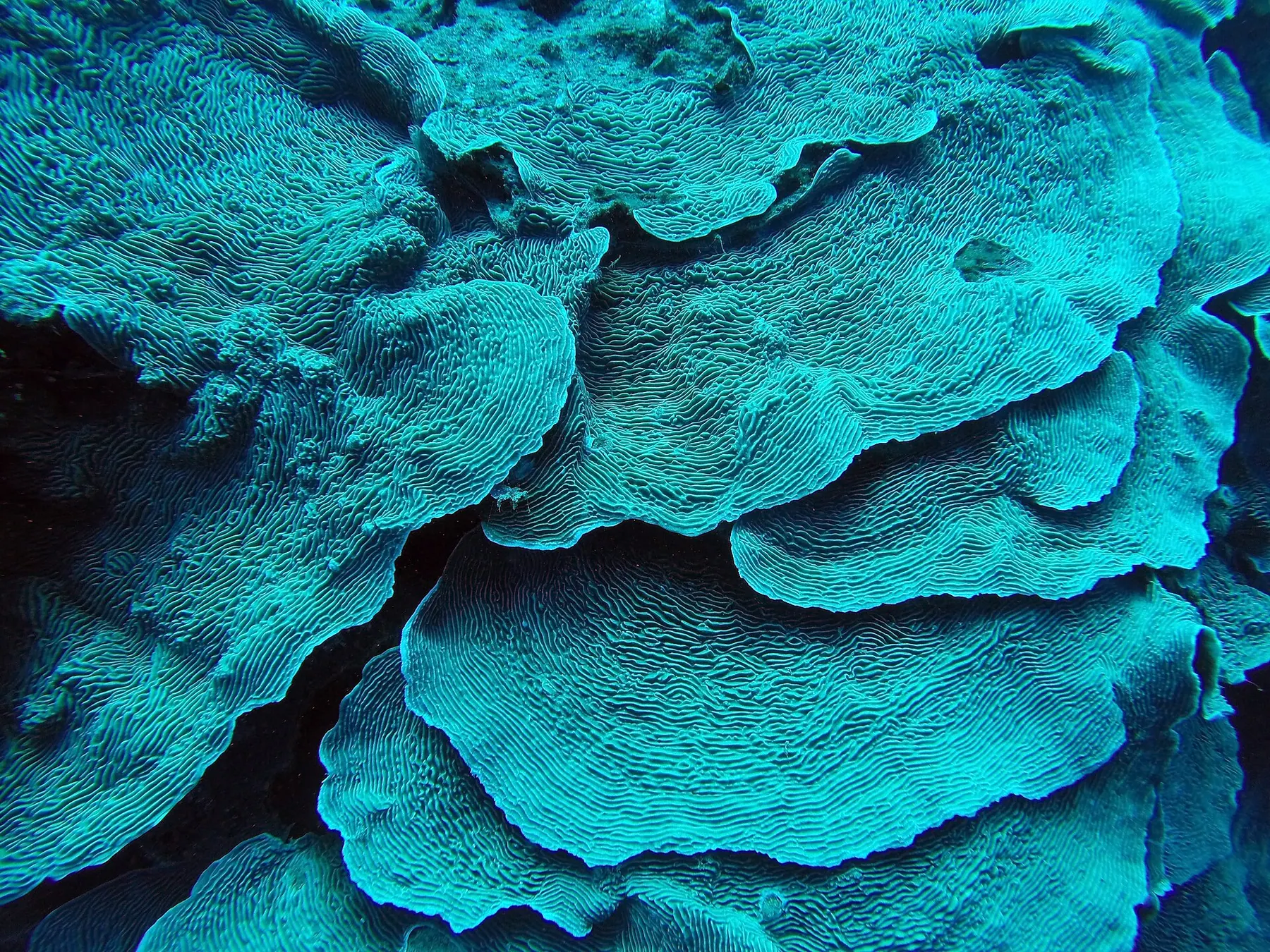
Overview
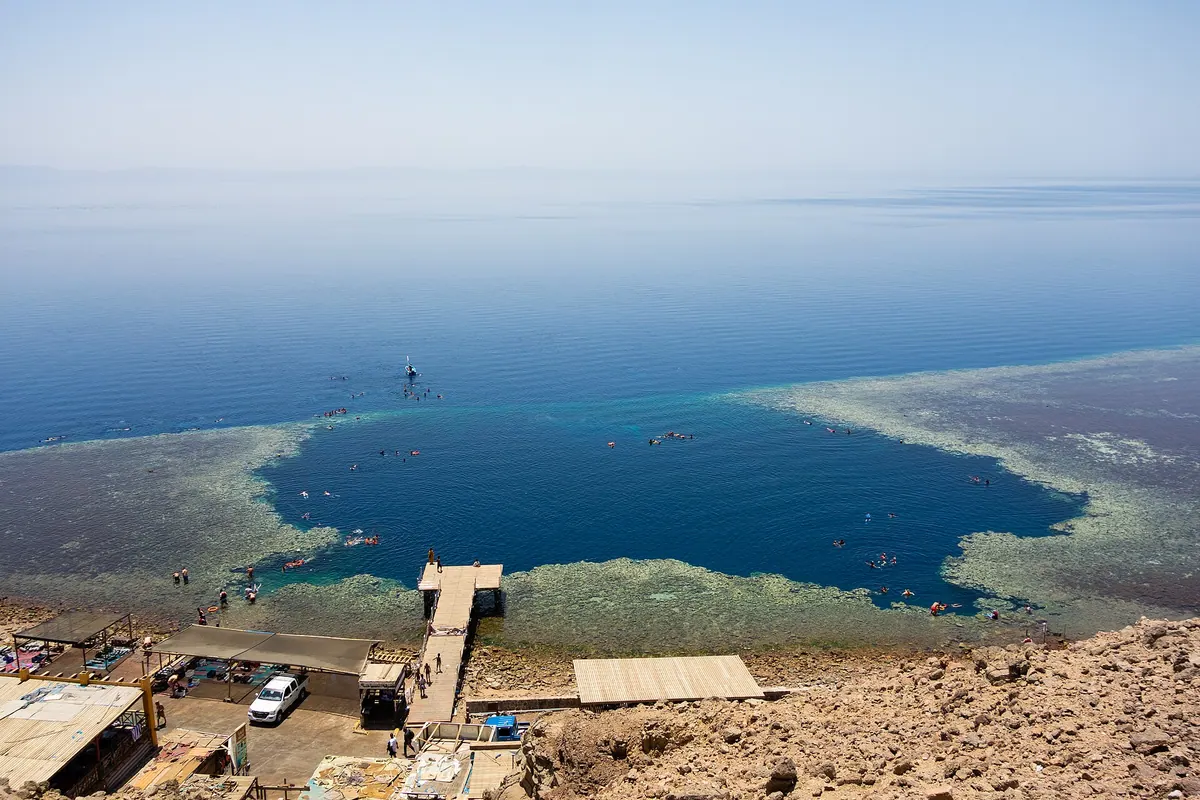
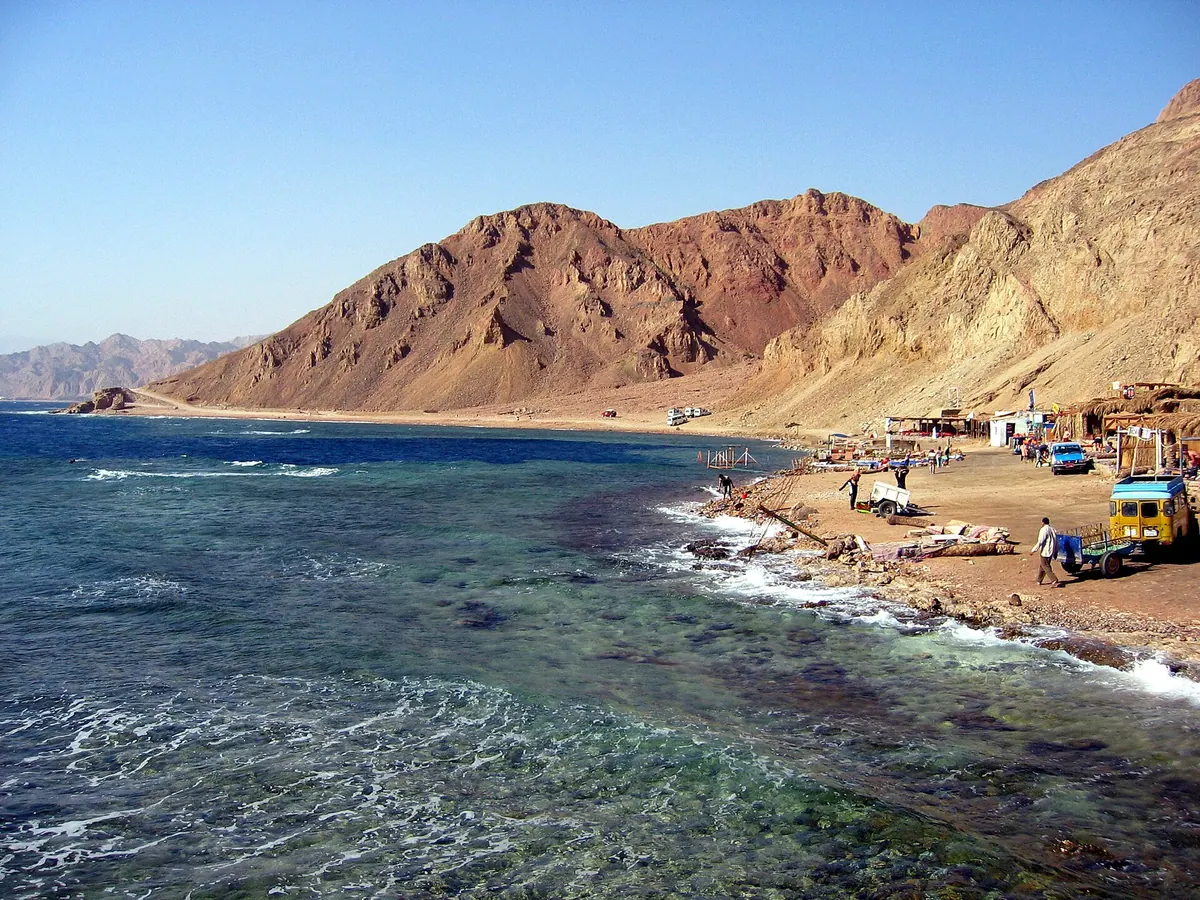
Shore diving is the main event in Dahab. A fringing reef drops steeply into the Gulf of Aqaba, and some entries need a jeep or a camel. The Chamber of Diving and Water Sports names the Blue Hole, the Canyon and Gabr el-Bint as the top sites. Eel Garden is named for its field of spotted garden eels.
The sea is coolest in February at 21.6 °C (71 °F) and warmest in August at 27.6 °C (82 °F). Agents often name March to May and September to November for moderate water, manageable currents and good visibility. Rain is rare all year.
The Abu Galum protectorate, declared in 1992, covers the coast north of Dahab. Egyptian protected areas forbid damaging or removing living organisms or natural features. Elsewhere in Egypt, touching corals and marine life is strictly prohibited, and gloves are allowed but best skipped.
Guided shore dives follow the diver's training agency ratios. Boat trips allow at most 12 divers per guide, and shore Discover Scuba is limited to 2 participants per instructor. Operators must have every customer sign a DAN health declaration. One operator lists a day of 2 dives at 79 EUR, plus 20 EUR a day for Canyon and Blue Hole entry.
Dahab Hyperbaric Medical Centre is next to the Dahabeya Hotel. Phone first to confirm it is staffed. Another centre at Sharm El Sheikh is about 80 to 90 km by road.
Summary drafted with AI from the sourced facts below; not yet reviewed by John R. Each figure here appears, with its source, further down the page.
Not yet checked by a person. Each fact shows its source: an official page, or a dive operator's or magazine's report where it says so. Rules and fees change: check with the authority and your dive operator before you go. In an emergency: DAN hotlines. How we check facts. Spotted a mistake? corrections@divehomebase.com.
- Sea temperature
- 21.6–27.6 °C / 71–82 °F
- NOAA OISST, monthly average 1991–2020
- Recompression chamber
- Sharm El Sheikh Hyperbaric Medical Centre opened on 10 March 1993; its medical director has worked with local government, search and rescue and Sinai dive centres; DAN Europe's RCAP team has visited it since 2004. About 80 to 90 km by road from Dahab
- DAN (Divers Alert Network), Recompression Chamber Network bulletin, April 2019, read 2026-11-23
Sea temperature by month
Average sea surface temperature near Dahab, 1991–2020. Deeper water and bays can be cooler. Best months for diving depend on more than temperature; we add them when a published source gives them.
- Jan22.3 °C / 72 °F
- Feb21.6 °C / 71 °F
- Mar21.7 °C / 71 °F
- Apr22.3 °C / 72 °F
- May23.9 °C / 75 °F
- Jun25.1 °C / 77 °F
- Jul26.7 °C / 80 °F
- Aug27.6 °C / 82 °F
- Sep26.8 °C / 80 °F
- Oct26.0 °C / 79 °F
- Nov24.9 °C / 77 °F
- Dec23.5 °C / 74 °F
Rules for divers
Among them: Egyptian protected areas; and 6 more below.
Set by the park or national authority. Breaking them can mean fines or losing your dive permit.
- Wearing gloves for warmth is not restricted, but touching corals and marine life is strictly prohibited; CDWS recommends no gloves unless needed1
- For guided or organised dives from shore, the CDWS defers to training-agency standards (WRSTC), not a fixed diver-to-guide number2
- Guide-to-diver ratio on safari or day boats: 1 guide or instructor per 12 divers (CDWS board decree 3/13/696). Discover Scuba from shore 1:2; introductory dives 1:1. Snorkelers 12 per guide2
- Egyptian dive operators must have every customer sign a DAN health declaration form before any activity3
- Egyptian protected areas (including Abu Galum) forbid damaging or removing living organisms or natural features; the rule is stated for the South Sinai national parks under Law 102 of 19834
- Discover Scuba Diving from the shore is limited to 2 participants per instructor; Introductory (intro) dives stay at 1 participant per instructor2
- Dive knives may be carried and used to signal, cut lines and free entanglements; using them on marine life is strictly prohibited1
- CDWS Egypt, read 2026-11-22
- CDWS, The CDWS Ratios for Diving and Snorkeling Activities, read 2026-11-23
- CDWS, Rules and Regulations page, read 2026-11-23
- EEAA-hosted South Sinai protectorates planning document (EU-funded South Sinai Regional Development Programme), read 2026-11-23
Marine life and conservation
Sightings are likelihoods, not promises.
- Coral bleaching: Corals of the northern Red Sea (including the Gulf of Aqaba) show high thermal tolerance and had not experienced mass bleaching up to the 1982-2020 record, but are warming fastest1
- Protection: Abu Galum protectorate (covers the coast north of Dahab): declared 1992 under Law 102 of 1983; classed by EEAA as a sustainable-use protected area; 425.7 km2; South Sinai; Prime Minister Decree 1511 of 1992, amended by Decree 33 of 19962
- Protection: Abu Galum Managed Resource Protected Area: 337 km2 land, 121 km2 sea, 458 km2 total3
- Protection: Egypt declares its protectorates under Law 102 of 1983 on natural protectorates; the EEAA Nature Conservation Sector keeps the list2
- Protection: The Nabq and Abu Galum protected areas (IUCN Category VI) were linked by the Dahab protected coastline, which together formed the Ras Mohammed National Park Sector; the Gulf of Aqaba protectorates were extended to the rest of Egypt's Gulf of Aqaba coast in 19984
- Frontiers in Marine Science 2022 (peer reviewed), read 2026-11-22
- Egyptian Environmental Affairs Agency (EEAA), Nature Conservation Sector: protectorates declared under Law 102 of 1983, read 2026-11-23
- EEAA-hosted South Sinai protectorates planning document (EU-funded South Sinai Regional Development Programme), read 2026-11-23
- Fouda, Hassan and Jeudy de Grissac, Geotema (journal note by EEAA-affiliated authors), read 2026-11-23
When to go
Best months: March-May and September-November.
Seasons are averages: weather in any one year can differ. Storm seasons come from the national or regional weather agency.
- Best months: March-May and September-November1
- Why: Shoulder seasons: moderate air and water temperatures, fewer crowds, manageable currents, high visibility for photography (Mar–May, Sep–Nov)1
- Rainy season: No rainy season: Sharm El-Sheikh averages about 8.5 mm of rain a year (1981-2010), with every month under 3 mm; the wettest months are January, November and December2
- Rainy season: Warm, dry climate with low rainfall all year; no rainy season1
- Wind and sea: Seasonal winds blow toward the southeast all year in the northern Red Sea (north of about 19-20 N); the wind direction does not reverse between summer and winter here3
- Dive The World (liveaboard agent), read 2026-11-22 · operator or magazine report
- WMO World Weather Information Service, data supplied by the Egyptian Meteorological Authority (Sharm El-Sheikh, 1981-2010), read 2026-11-23
- Bower, Farrar et al., Red Sea chapter (WHOI, book chapter), read 2026-11-22
Getting there
- Transfer: Dahab lies about 81 km north of the resort of Sharm el-Sheikh and about 135 km from Eilat1
- Egypt State Information Service, Dahab page, read 2026-11-23
What it costs
A two-tank boat dive costs about 79 EUR for a full day of 2 dives in… (Emperor Divers Sharm el Sheikh).
Prices are what the operator or authority published, with the date; they change. We don't sell trips and no price here is paid placement.
- Two-tank boat dive: 79 EUR for a full day of 2 dives in Dahab (supplement list)1
- Park fees for a trip: Canyon and Blue Hole entrance fee: 20 EUR per day (operator list)1
- Emperor Divers Sharm el Sheikh (operator price list), read 2026-11-22 · operator or magazine report
Conditions
- Best months: March-May and September-November1
- Why: Shoulder seasons: moderate air and water temperatures, fewer crowds, manageable currents, high visibility for photography (Mar–May, Sep–Nov)1
- Diving: Shore diving (reached by jeep or camel; fringing reef with a steep drop into the Gulf of Aqaba); technical diving centres exist2
- Dive sites: CDWS names Blue Hole, the Canyon and Gabr el-Bint as the top Dahab dive sites; Dahab diving is mostly from shore, reached by jeep or camel2
- Dive The World (liveaboard agent), read 2026-11-22 · operator or magazine report
- CDWS Egypt, read 2026-11-22
Dahab in pictures
Dive sites
Eel Garden
- Eel Garden is named for a field of spotted garden eels living in burrows in the sand (reported all year)1
- Lonely Planet (via search summary); species name from FishBase / Charles University Dahab lagoon list, read 2026-11-22 · operator or magazine report
Questions about diving in Dahab
When is the best time to dive Dahab?
March to May and September to November, according to one liveaboard agent, for moderate water, manageable currents and good visibility. Reported months vary.
Which are the main dive sites in Dahab?
The Blue Hole, the Canyon and Gabr el-Bint are named as the top sites. Most Dahab diving is from shore, reached by jeep or camel.
How much does diving cost in Dahab?
One operator lists 79 EUR for a day of 2 dives, plus 20 EUR a day for Canyon and Blue Hole entry. Other centres may charge differently.
Is there a recompression chamber in Dahab?
Yes, Dahab Hyperbaric Medical Centre, next to the Dahabeya Hotel. Phone first to confirm it is staffed. The Sharm El Sheikh centre is about 80 to 90 km by road.
Not found yet: snorkelling and learning, an official diving level. We add facts once there is an official or published source. See every dive destination, or read about diving safety and how the site is paid for.