Diving in Marsa Alam
Sea temperatures of 23–30 °C (73–85 °F) through the year, and 5 facts from official sources, each with the date we read it. 4 more come from dive operators' and magazines' reports and say so.
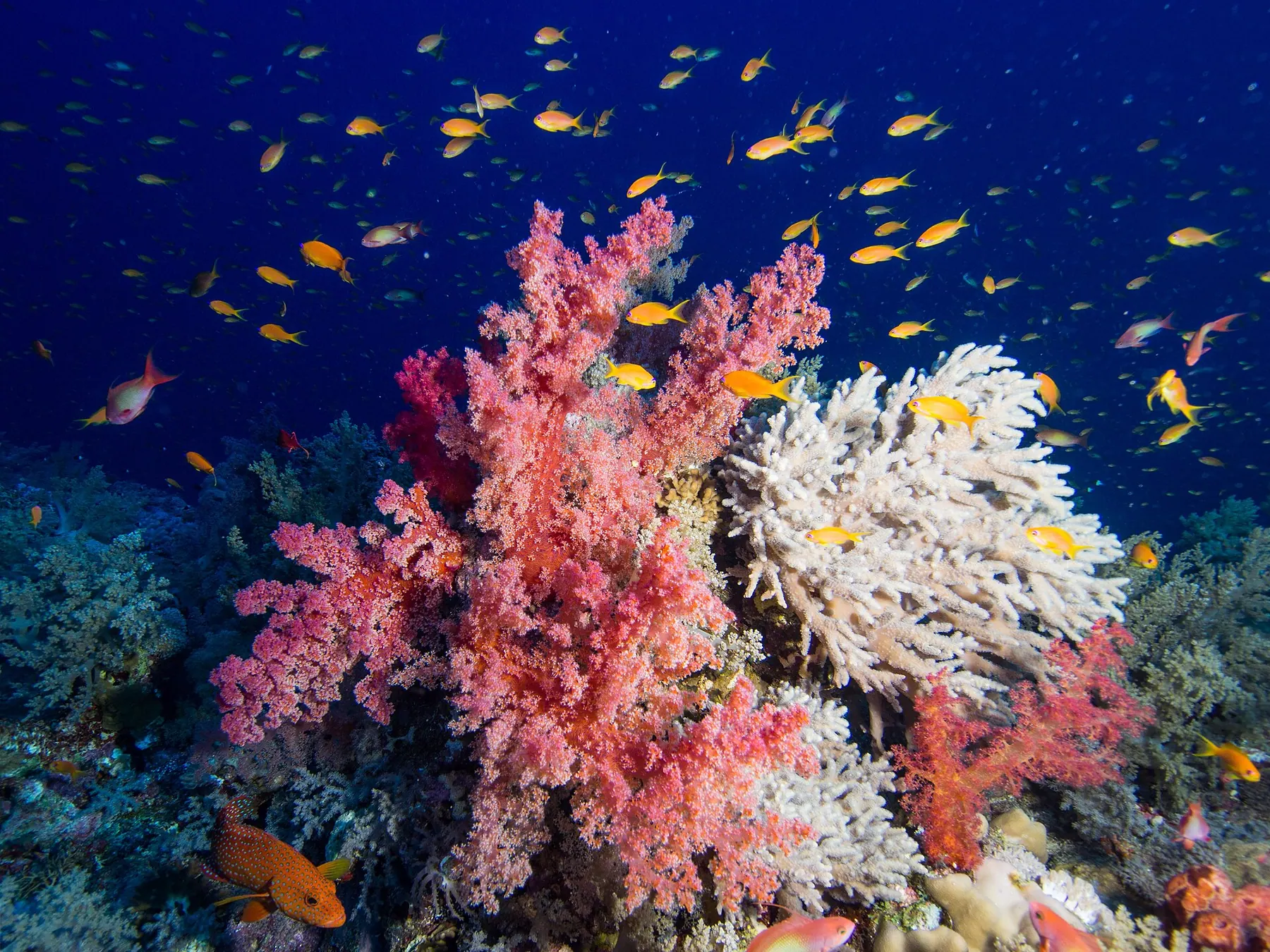
Overview
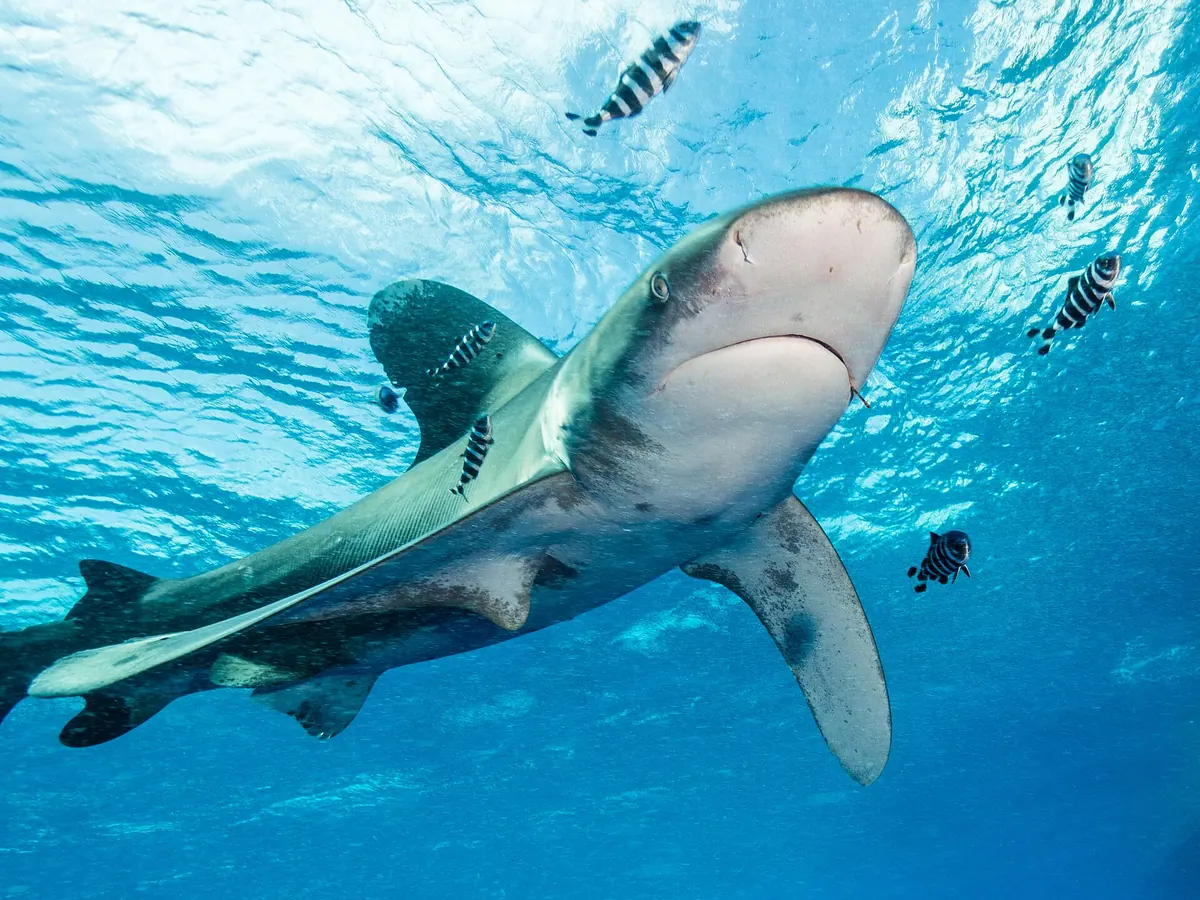
Oceanic whitetip sharks are the main draw at the offshore reefs. They turn up regularly at Big and Little Brother, up to 25 together, and at Elphinstone, mostly in groups of about three but up to 28. At Daedalus they are mainly seen in October and November, and encounters at the Brothers and Elphinstone peak in those months too, according to the shark specialists who track them.
Scalloped hammerheads gather at Daedalus in regular groups of up to 10, predictably in the boreal summer. Pelagic threshers are present at Daedalus and the Brothers. Liveaboard agents often name June to September for the southern offshore sites.
Currents are strong at the Elphinstone walls and at Daedalus, mostly on the western side. Elphinstone's plateau lies at 20 to 40 m (66 to 131 ft). Near whitetips, the guidelines say to stay at 5 m or deeper and not to touch sharks.
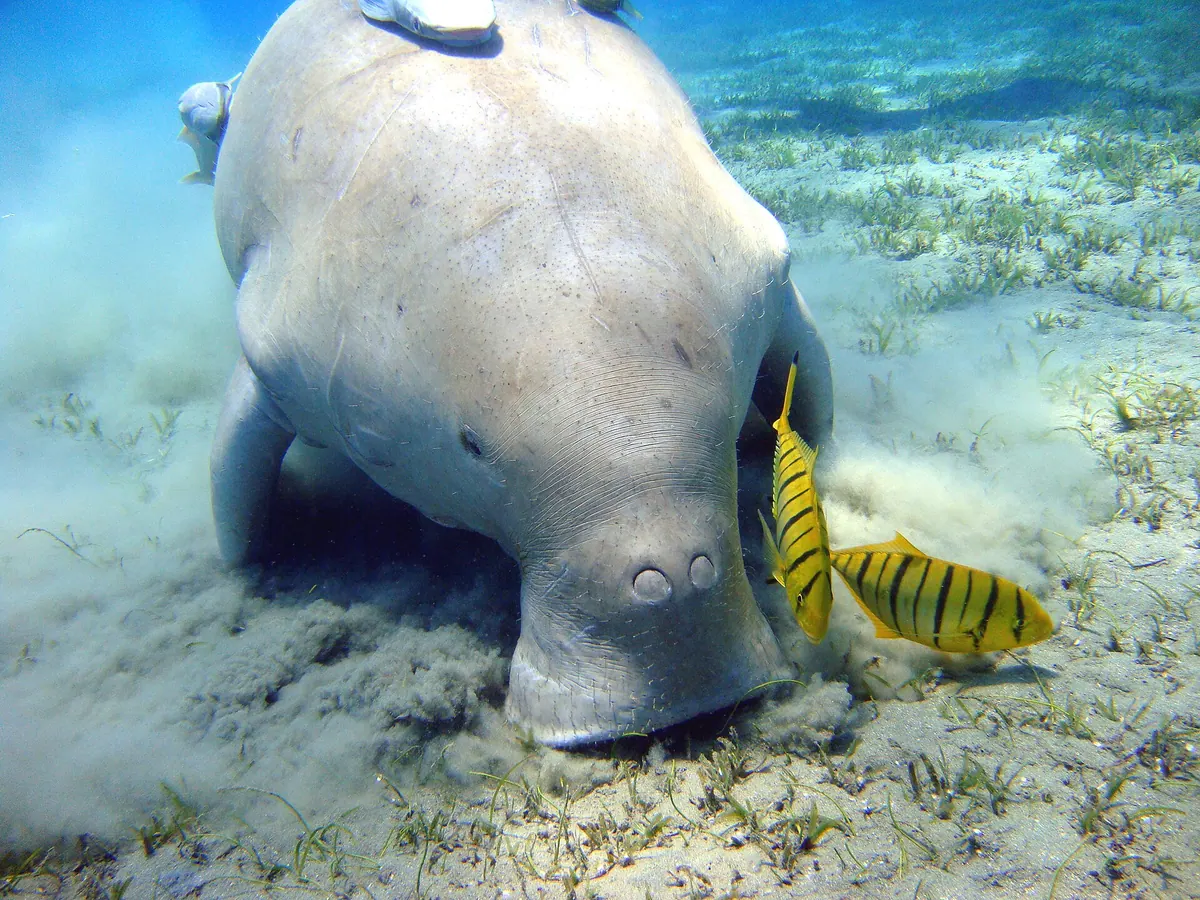
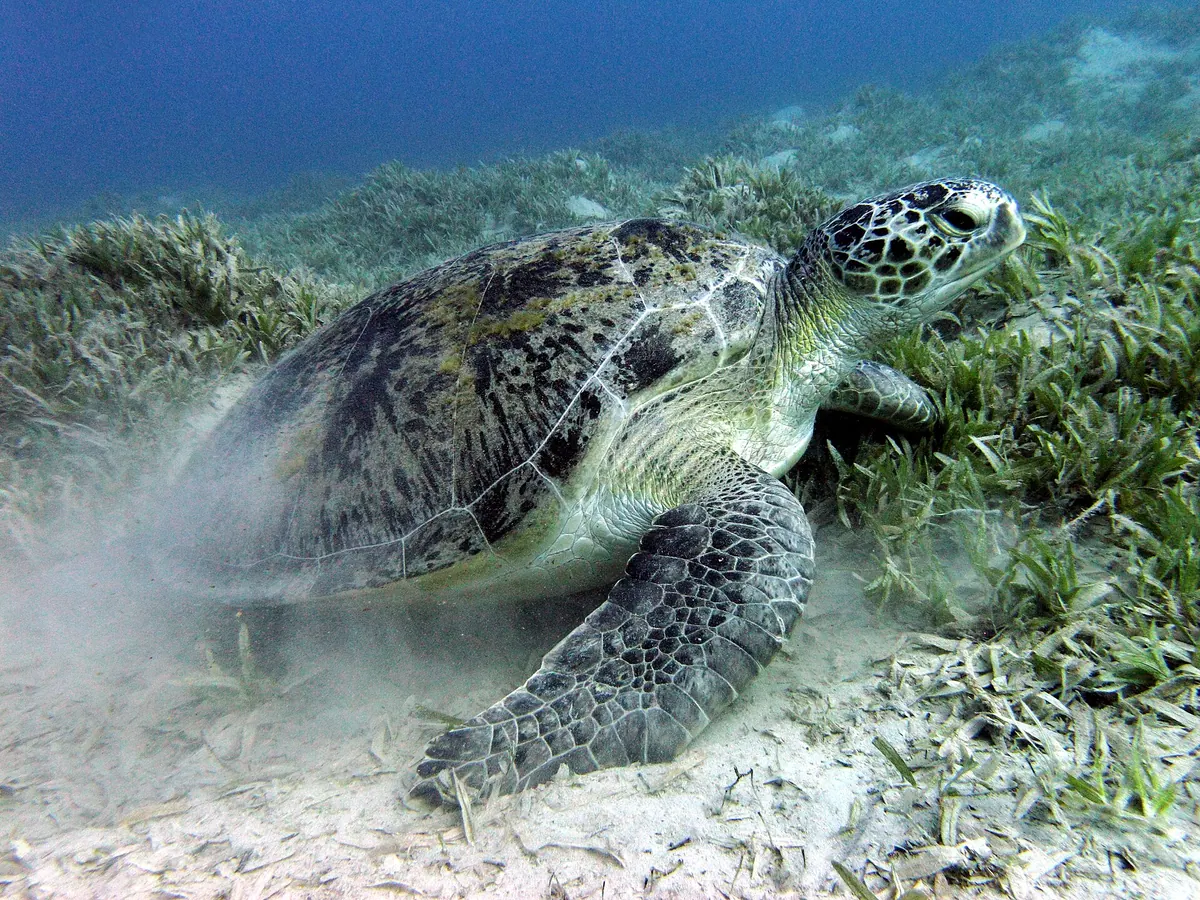
Closer to shore, dugongs live in several seagrass bays, Abu Dabbab being the best known, but seeing one is luck, says the Red Sea conservation group HEPCA. A resting pod of spinner dolphins, many of them year-round residents, uses the Samadai lagoon by day.
One Port Ghalib operator lists 91.20 EUR per boat day with 2 dives, including marine park fees. A Samadai trip with lunch is a 68 EUR supplement. The sea ranges from 22.6 °C (73 °F) in February to 29.5 °C (85 °F) in August. Touching corals and marine life is strictly prohibited.
Summary drafted with AI from the sourced facts below; not yet reviewed by John R. Each figure here appears, with its source, further down the page.
Not yet checked by a person. Each fact shows its source: an official page, or a dive operator's or magazine's report where it says so. Rules and fees change: check with the authority and your dive operator before you go. In an emergency: DAN hotlines. How we check facts. Spotted a mistake? corrections@divehomebase.com.
- Sea temperature
- 22.6–29.5 °C / 73–85 °F
- NOAA OISST, monthly average 1991–2020
Sea temperature by month
Average sea surface temperature near Marsa Alam, 1991–2020. Deeper water and bays can be cooler. Best months for diving depend on more than temperature; we add them when a published source gives them.
- Jan23.2 °C / 74 °F
- Feb22.6 °C / 73 °F
- Mar22.8 °C / 73 °F
- Apr23.7 °C / 75 °F
- May25.4 °C / 78 °F
- Jun27.0 °C / 81 °F
- Jul28.6 °C / 83 °F
- Aug29.5 °C / 85 °F
- Sep28.6 °C / 84 °F
- Oct27.6 °C / 82 °F
- Nov26.3 °C / 79 °F
- Dec24.5 °C / 76 °F
Rules for divers
2 rules, from CDWS Egypt.
Set by the park or national authority. Breaking them can mean fines or losing your dive permit.
- Wearing gloves for warmth is not restricted, but touching corals and marine life is strictly prohibited; CDWS recommends no gloves unless needed1
- Guide-to-diver ratio on safari or day boats: 1 guide or instructor per 12 divers (CDWS board decree 3/13/696). Discover Scuba from shore 1:2; introductory dives 1:1. Snorkelers 12 per guide2
- CDWS Egypt, read 2026-11-22
- CDWS Egypt, read 2026-11-22
Marine life and conservation
Sightings are likelihoods, not promises.
- Coral bleaching: Red Sea and Gulf of Aden region: major heat stress in 1998 and 2010, prolonged stress 2015-2016, renewed warming 2020, extreme stress peaking 2023-2024 with severe bleaching, easing in 20251
- Protection: Marsa Alam marine area is protected; conservation cooperation (authorities, NGOs, USAID) since 1995; mooring buoys at dive sites2
- GCRMN, Status of Coral Reefs of the World 2025, ch. 7 (monitoring-network report, not a journal paper), read 2026-11-22
- CDWS Egypt, read 2026-11-22
When to go
Best months: June-September for the southern offshore sites.
Seasons are averages: weather in any one year can differ. Storm seasons come from the national or regional weather agency.
- Best months: June-September for the southern offshore sites (Brothers, Daedalus, Zabargad, Rocky); March-May and September-November for the Red Sea overall1
- Rainy season: Warm, dry climate with low rainfall all year; no rainy season1
- Wind and sea: Seasonal winds blow toward the southeast all year in the northern Red Sea (north of about 19-20 N); the wind direction does not reverse between summer and winter here2
- Dive The World (liveaboard agent), read 2026-11-22 · operator or magazine report
- Bower, Farrar et al., Red Sea chapter (WHOI, book chapter), read 2026-11-22
Getting there
- Nearest airport: Marsa Alam International Airport (RMF), 60 km north of Marsa Alam town1
- Wikipedia (reference), read 2026-11-22 · operator or magazine report
What it costs
Prices are what the operator or authority published, with the date; they change. We don't sell trips and no price here is paid placement.
- Two-tank boat dive: 91.20 EUR per boat day with 2 dives (80 EUR pre-booked), including marine park fees (Port Ghalib price list)1
- Emperor Divers Port Ghalib (operator price list), read 2026-11-22 · operator or magazine report
Conditions
- Best months: June-September for the southern offshore sites (Brothers, Daedalus, Zabargad, Rocky); March-May and September-November for the Red Sea overall1
- Dive The World (liveaboard agent), read 2026-11-22 · operator or magazine report
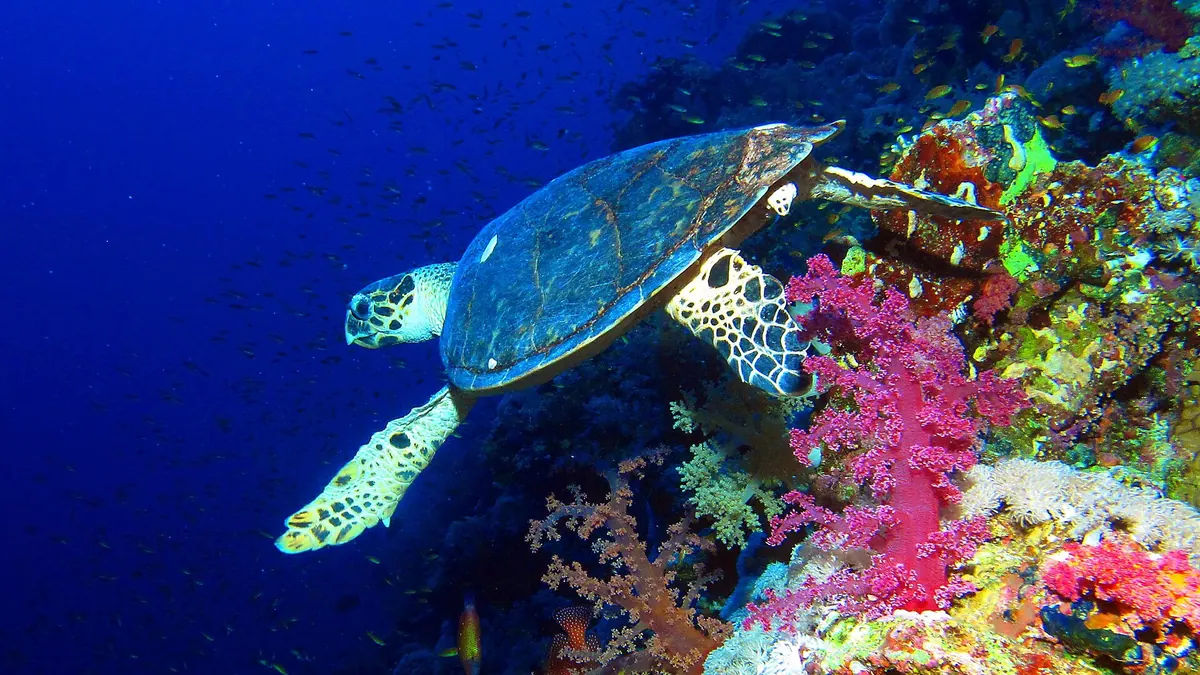
Marsa Alam in pictures
Dive sites
Brothers Islands
- Oceanic whitetips at Big and Little Brother are regularly seen, up to 25 together; encounter rates peak October-November (regularly seen: Oct–Nov)1
- Pelagic threshers are listed as present at Daedalus and the Brothers; operators say they are more often seen in the cooler months (reported all year)1
- Oceanic whitetip guidelines (CDWS-hosted, by Dr E. Bojanowski): stay at 5 m or deeper near sharks, do not swim or snorkel where whitetips may occur, do not touch sharks2
Daedalus
- Currents: Strong at Daedalus, mostly the western side3
- Scalloped hammerhead at Daedalus: regular aggregations of up to 10; gather predictably in the boreal summer (reported: Jun–Aug)3
- Oceanic whitetip shark at Daedalus: mainly observed October-November, seen from May; effort high April-November and low December-March, so winter absence is not shown (reported: Oct–Nov)3
Elphinstone
Marsa Abu Dabbab
- Dugongs live in several seagrass bays around Marsa Alam, with Abu Dabbab the best known; seeing one is luck, not a given5
- IUCN SSC Shark Specialist Group (ISRA factsheet), read 2026-11-22
- CDWS Egypt (guidelines prepared by Dr Elke Bojanowski, redseasharks.org), read 2026-11-22
- IUCN SSC Shark Specialist Group (ISRA factsheet), read 2026-11-22
- IUCN SSC Shark Specialist Group (ISRA factsheet), read 2026-11-22
- HEPCA (NGO) with park-director statement reported by Egypt Today (Oct 2026, via search summary), read 2026-11-22 · operator or magazine report
- Emperor Divers Port Ghalib (operator price list), read 2026-11-22 · operator or magazine report
- IWC scientific literature database (study abstract via search summary), read 2026-11-22 · read through a summary
Questions about diving in Marsa Alam
When can you see oceanic whitetip sharks in Marsa Alam?
October and November, when encounters peak at the Brothers, Daedalus and Elphinstone. Few dives are made at Daedalus in winter, so the sharks may well be there then too.
When are hammerheads seen at Daedalus?
In the boreal summer, when scalloped hammerheads gather predictably in groups of up to 10. The timing comes from operators.
Can you see dugongs at Marsa Alam?
Sometimes. Dugongs live in several seagrass bays around Marsa Alam, with Abu Dabbab the best known, but seeing one is luck, not a given.
How much does a dive day cost in Marsa Alam?
One Port Ghalib operator lists 91.20 EUR per boat day with 2 dives, including marine park fees, or 80 EUR if pre-booked. Other operators may differ.
Not found yet: snorkelling and learning, an official diving level. We add facts once there is an official or published source. See every dive destination, or read about diving safety and how the site is paid for.