Diving in Fiji
Sea temperatures of 26–29 °C (78–84 °F) through the year, and 11 facts from official sources, each with the date we read it.
Overview
Fiji divers go out from land-based resorts on day boats of two or three tanks, or on liveaboards. Nadi, on Viti Levu, is the main arrival airport, and the nearest recompression chamber is in Suva, according to Divers Alert Network (DAN).
The dives range across reef, wall, pinnacle, drift, shark-feeding, shore-night and macro. Currents are mild to medium by site and tide, and the stronger-current sites are more colourful with more pelagic life. No single level suits all of Fiji, but experience with negative entries, drift dives and surface marker buoys helps. Visibility is 9-27 m (30-89 ft), typically 18-27 m, going by one trip.
The sea runs from 25.6 °C (78 °F) in August to 28.9 °C (84 °F) in March. November to April is the rainy season. Manta rays are listed from May to October, though operators report some sites with mantas year-round, and April to July is marked as soft coral season.
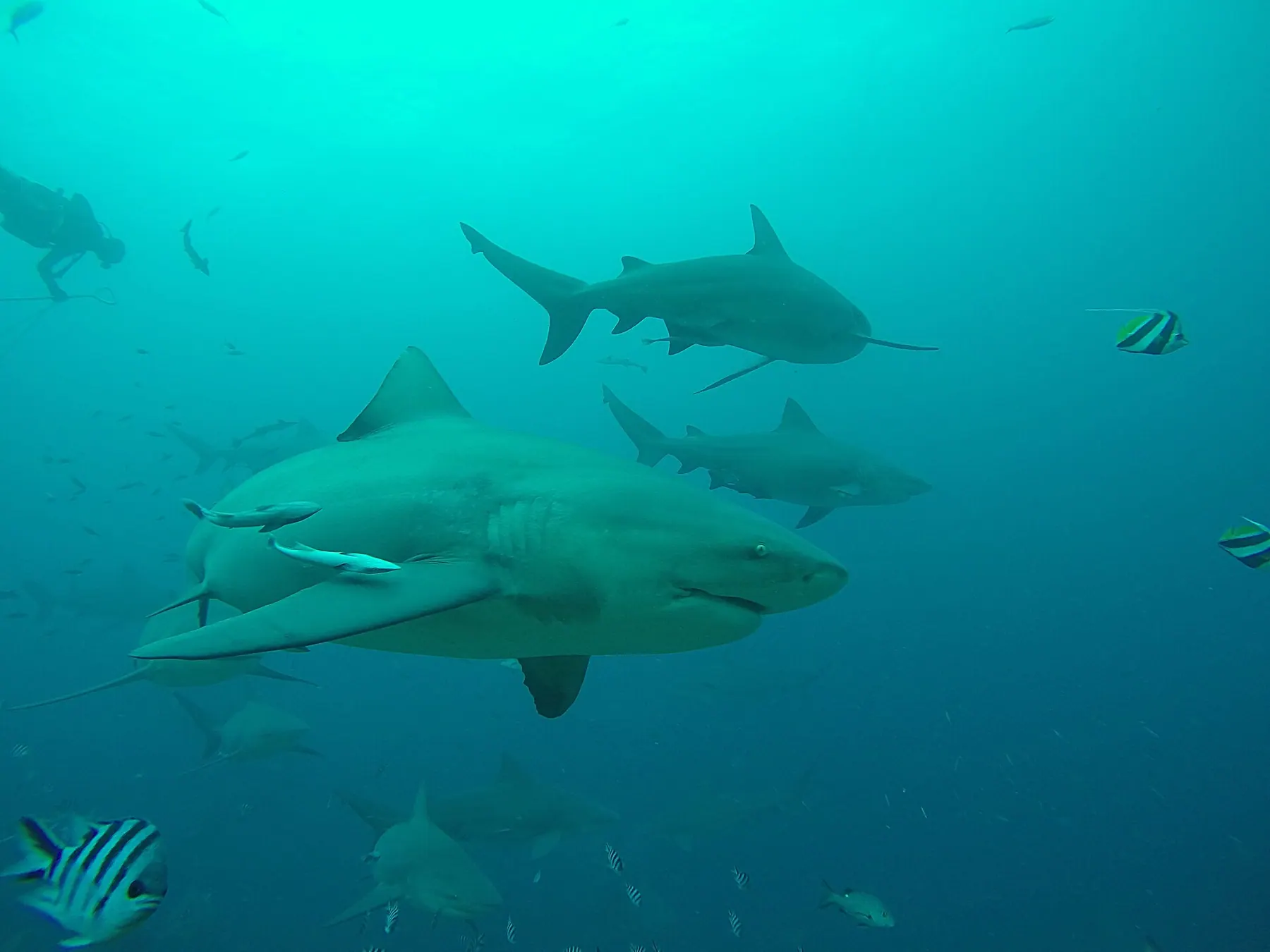
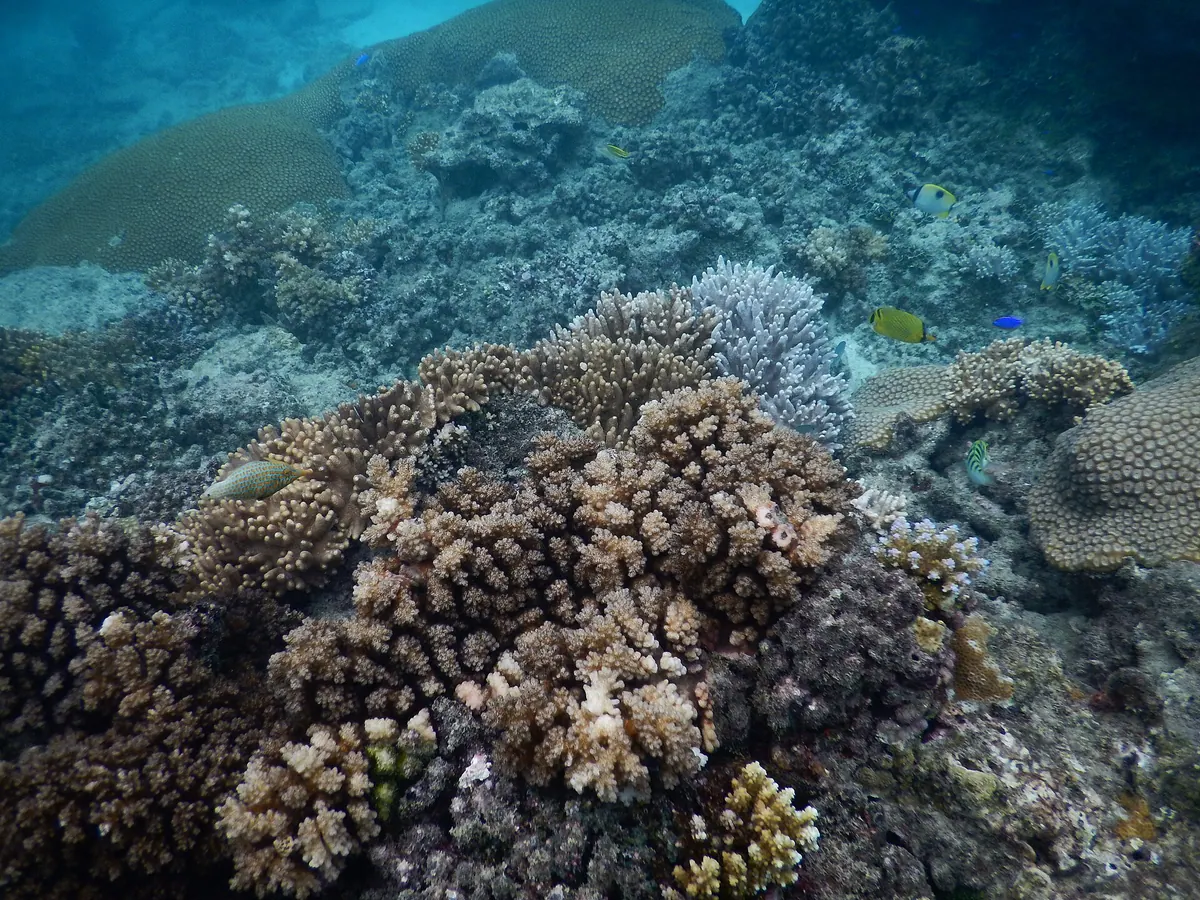
Soft corals are the signature at Rainbow Reef, Bligh Waters, Namena and Beqa. Fiji has over 300 coral species, about 80 of them soft corals. At Beqa, bull, lemon and tawny nurse sharks are listed, and a tiger shark on the Cathedral dive, a provisioned (fed) encounter at about 20 m (66 ft).
Summary drafted with AI from the sourced facts below; not yet reviewed by John R. Each figure here appears, with its source, further down the page.
Not yet checked by a person. Each fact shows its source: an official page, or a dive operator's or magazine's report where it says so. Rules and fees change: check with the authority and your dive operator before you go. In an emergency: DAN hotlines. How we check facts. Spotted a mistake? corrections@divehomebase.com.
- Level
- Varies by site: DAN advises experience with negative entries, drift dives and surface marker buoys; no single level
- DAN Alert Diver, Fiji feature (Q4 2024), read 2026-11-22
- Sea temperature
- 25.6–28.9 °C / 78–84 °F
- NOAA OISST, monthly average 1991–2020
- Recompression chamber
- Colonial War Memorial (CWM) Hospital hyperbaric unit, Suva; Pacific Specialist Healthcare HBOT, Nadi (per industry notes)
- Fiji Prime Minister's Office (speech, 2022-09-08), read 2026-11-20
Sea temperature by month
Average sea surface temperature near Fiji, 1991–2020. Deeper water and bays can be cooler. Best months for diving depend on more than temperature; we add them when a published source gives them.
- Jan28.5 °C / 83 °F
- Feb28.8 °C / 84 °F
- Mar28.9 °C / 84 °F
- Apr28.6 °C / 83 °F
- May27.6 °C / 82 °F
- Jun26.8 °C / 80 °F
- Jul26.0 °C / 79 °F
- Aug25.6 °C / 78 °F
- Sep25.7 °C / 78 °F
- Oct26.1 °C / 79 °F
- Nov27.0 °C / 81 °F
- Dec27.8 °C / 82 °F
Marine life and conservation
Most often reported: frogfish.
Sightings are likelihoods, not promises.
- Coral bleaching: Heat stress alert level 1 expected to return to Fiji and Vanuatu (late 2017)1
- Macro life on sheltered Fiji reefs includes frogfish, ghost pipefish, nudibranchs and ribbon eels2
- NOAA Coral Reef Watch, read 2026-11-22
- DAN Alert Diver, Fiji feature (Q4 2024), read 2026-11-22 · read through a summary
When to go
Seasons are averages: weather in any one year can differ. Storm seasons come from the national or regional weather agency.
- Rainy season: Nov-Apr1
- Divers Alert Network (DAN), read 2026-11-22
Getting there
- Nearest airport: Nadi (Viti Levu) is the main arrival airport1
- Divers Alert Network (DAN), read 2026-11-22
Conditions
Visibility 9–27 m / 30–89 ft; currents mild to medium.
- Access: Land-based resorts (2-3 tank day boats) and liveaboards; nearest chamber Suva1
- Currents: Mild to medium1
- Diving: Reef, wall, pinnacle, drift, shark-feeding, shore-night, macro1
- Visibility: 9–27 m / 30–89 ft1
- DAN Alert Diver, Fiji feature (Q4 2024), read 2026-11-22 · read through a summary
Fiji in pictures
Dive sites
Fish Factory Rainbow Reef
- A hammerhead was sighted at Fish Factory (Rainbow Reef); occasional hammerheads also reported at Namena1
Great White Wall Rainbow Reef
- Usual deepest: 30 m / 98 ft1
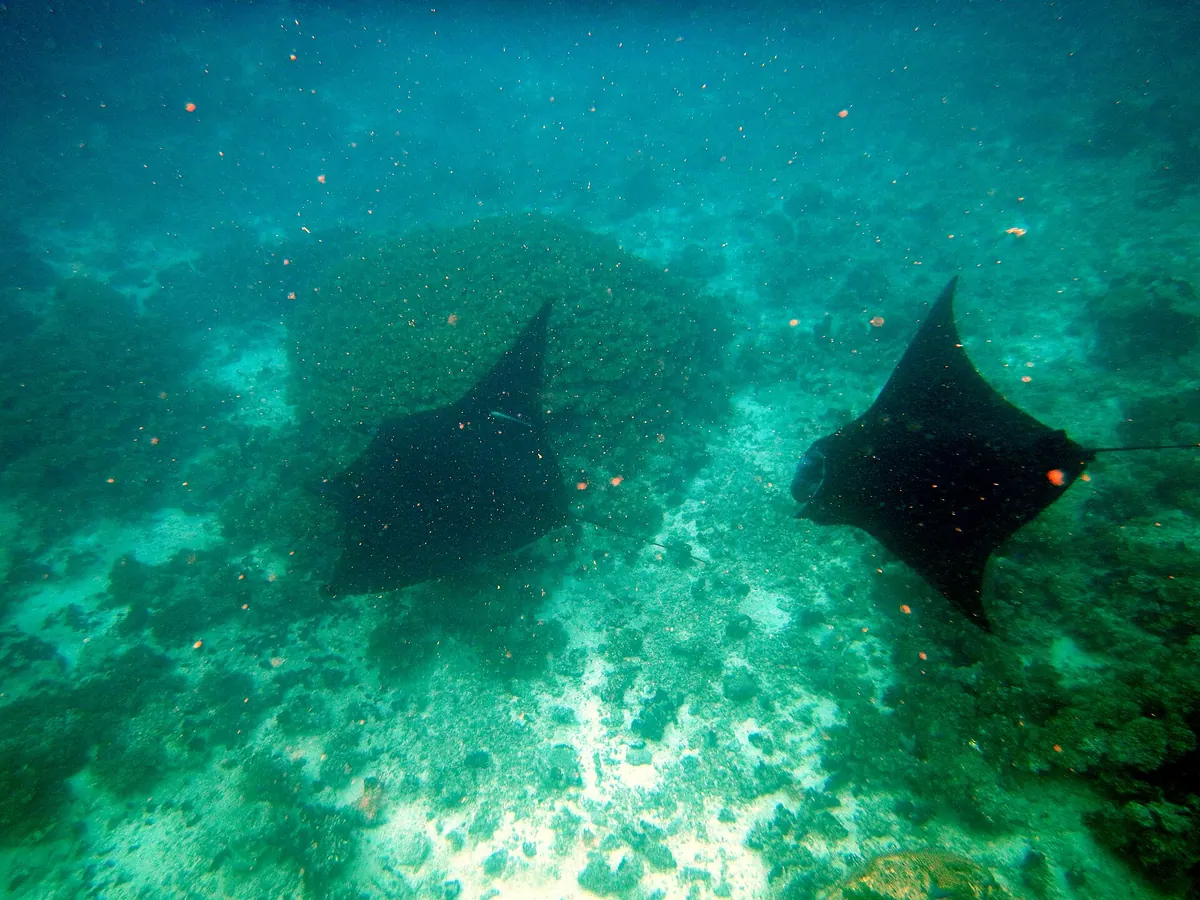
Manta Mount Namena
- Tourism Fiji's seasonal chart lists manta rays May to October; operators report some sites with mantas year-round (most often seen: May–Oct)2
Mellow Yellow Bligh Water
Rainbow Reef
- Soft corals are the signature at Rainbow Reef, Bligh Waters, Namena and Beqa; Tourism Fiji's chart marks April to July as soft coral season (most often seen: Apr–Jul)2
- DAN Alert Diver, Fiji feature (Q4 2024), read 2026-11-22 · read through a summary
- Tourism Fiji, diving pages (seasonal chart), read 2026-11-22 · read through a summary
Questions about diving in Fiji
When can you see manta rays in Fiji?
Manta rays are listed from May to October. Operators report some sites with mantas year-round, so the months are a likelihood, not a promise.
Do you need to be advanced to dive Fiji?
Not necessarily. The level varies by site, and DAN names no single one for Fiji. It advises experience with negative entries, drift dives and surface marker buoys. Currents are mild to medium.
Where is the nearest hyperbaric chamber in Fiji?
The Colonial War Memorial Hospital hyperbaric unit in Suva. Fiji's Prime Minister's Office said a new chamber was commissioned there on 8 September 2022. Pacific Specialist Healthcare HBOT in Nadi is also listed.
How clear is the water in Fiji?
Visibility ran 9-27 m (30-89 ft), typically 18-27 m, with the worst about 9 m. That is from one trip, and no split by month is given.
Not found yet: what it costs, snorkelling and learning. We add facts once there is an official or published source. See every dive destination, or read about diving safety and how the site is paid for.