Diving in French Polynesia
Sea temperatures of 27–29 °C (80–84 °F) through the year, and 7 facts from official sources, each with the date we read it.
Overview
Fakarava, in the Tuamotus, is the focus here. The diving is pass drifts timed for the incoming tide, plus wall dives. The South Pass has a relatively steady inflow, while the North Pass is powerful and fast.
Advanced open-water and drift certifications are advised for the Fakarava passes. The South Pass is described as no place for unskilled divers, and the North Pass may require advanced skills. This is one writer's advice for DAN, not an agency standard.
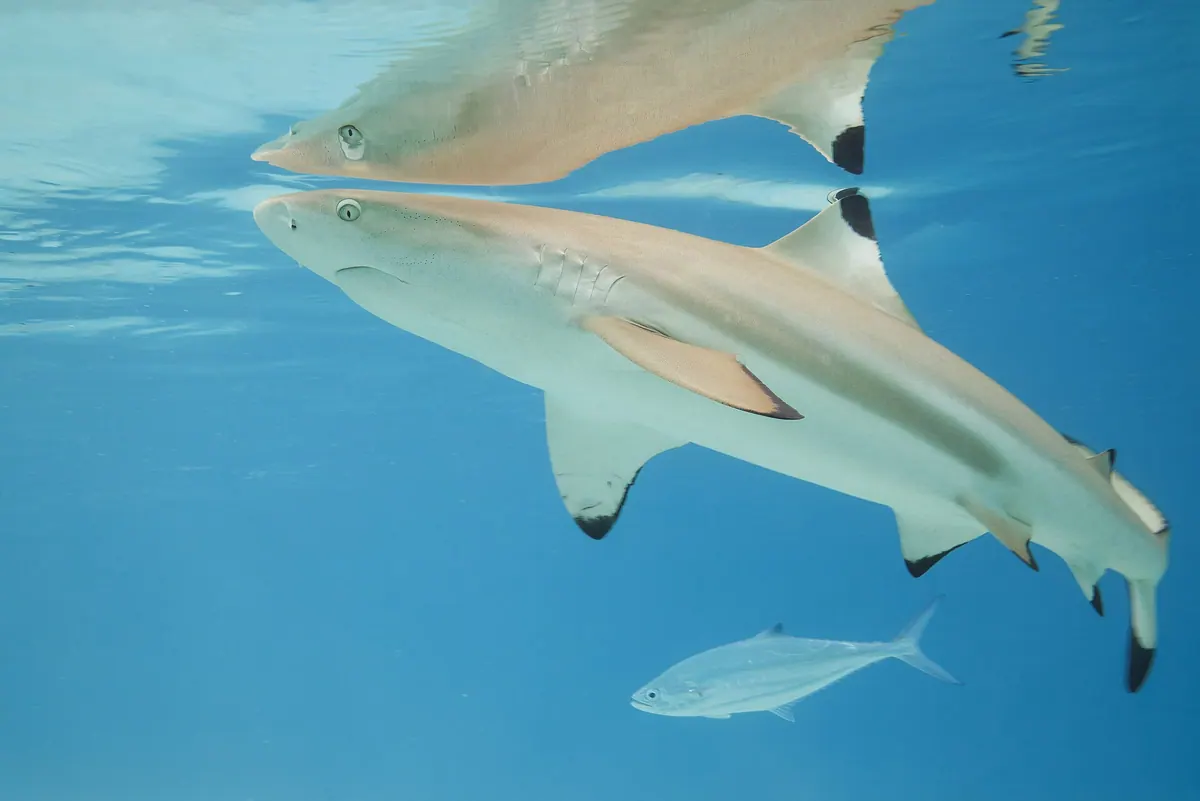
Grey reef sharks gather by the hundreds in the South Pass on incoming tides, with fewer in the North Pass. Camouflage grouper spawn around the full moon in June and July, which draws the sharks. July to September is the usual manta window at Fakarava, and January to March the hammerhead window, though the DAN author saw none.
In Tiputa Pass, a bottlenose dolphin pod interacts with divers. No months are given for sightings.
May to October is the mild, dry season at Fakarava, and November to April is the rainy one. Sea temperature runs from 26.9 °C (80 °F) in August to 29.1 °C (84 °F) in March. One flight a day links Papeete to Fakarava in 1 h 10 min, so confirm the schedule with the airline.
The nearest listed chamber is the hospital hyperbaric chamber at Pirae, Tahiti.
Summary drafted with AI from the sourced facts below; not yet reviewed by John R. Each figure here appears, with its source, further down the page.
Not yet checked by a person. Each fact shows its source: an official page, or a dive operator's or magazine's report where it says so. Rules and fees change: check with the authority and your dive operator before you go. In an emergency: DAN hotlines. How we check facts. Spotted a mistake? corrections@divehomebase.com.
- Sea temperature
- 26.9–29.1 °C / 80–84 °F
- NOAA OISST, monthly average 1991–2020
- Recompression chamber
- Centre hospitalier de la Polynesie francaise (CHPF) hyperbaric chamber (Caisson Hyperbare), Pirae, Tahiti
- CHPF (hospital), emergency department presentation, read 2026-11-20
Sea temperature by month
Average sea surface temperature near French Polynesia, 1991–2020. Deeper water and bays can be cooler. Best months for diving depend on more than temperature; we add them when a published source gives them.
- Jan28.7 °C / 84 °F
- Feb28.8 °C / 84 °F
- Mar29.1 °C / 84 °F
- Apr29.0 °C / 84 °F
- May28.5 °C / 83 °F
- Jun27.9 °C / 82 °F
- Jul27.2 °C / 81 °F
- Aug26.9 °C / 80 °F
- Sep27.0 °C / 81 °F
- Oct27.4 °C / 81 °F
- Nov28.1 °C / 83 °F
- Dec28.6 °C / 83 °F
When to go
Best months: May-Oct.
Seasons are averages: weather in any one year can differ. Storm seasons come from the national or regional weather agency.
- Divers Alert Network (DAN), read 2026-11-22
Getting there
- Route: Papeete (PPT) to Fakarava (FAV): one flight a day, 1 h 10 min1
- Divers Alert Network (DAN), read 2026-11-22
Conditions
Currents South Pass: relatively steady inflow.
- Best months: May-Oct (mild, dry season)1
- Currents: South Pass: relatively steady inflow; North Pass: powerful and fast; tide-driven pass flows, dive on the incoming tide1
- Diving: Pass drift dives (incoming tide), wall1
- Divers Alert Network (DAN), read 2026-11-22
French Polynesia in pictures
Dive sites
Fakarava
Fakarava North Pass
Fakarava South Pass
- Level: Advanced open water plus drift certification; 'not a place for unskilled divers'1
- Grey reef sharks gather by the hundreds on incoming tides in Fakarava's South Pass (Tumakohua); the North Pass has fewer1
- Grouper spawning aggregations in the South Pass fall in June and July, drawing the sharks (most often seen: Jun–Jul)1
- Camouflage grouper spawning around the full moon, June-July (most often seen: Jun–Jul)1
Garuae Fakarava
- Usual deepest: 27 m / 89 ft1
Tiputa Pass
- A bottlenose dolphin pod, studied and individually identified for decades, plays in Tiputa Pass and interacts with divers (reported all year)2
- DAN Alert Diver, A Tale of Two Passes (Fakarava), read 2026-11-22 · read through a summary
- DAN Alert Diver, The Alluring Hues of French Polynesia, read 2026-11-22 · read through a summary
Questions about diving in French Polynesia
When is the best time to dive Fakarava?
May to October, the mild, dry season. That comes from one writer's report on Fakarava and does not cover the Society Islands.
Do you need Advanced Open Water for Fakarava?
Advanced open-water and drift certifications are advised for the passes, according to DAN's author. That is one writer's guidance, not an agency standard.
When can you see manta rays in Fakarava?
July to September is the usual manta window at Fakarava. It is a likelihood, not a promise.
Are there sharks in Fakarava?
Yes. Grey reef sharks gather by the hundreds in the South Pass on incoming tides, with fewer in the North Pass.
Not found yet: what it costs, snorkelling and learning. We add facts once there is an official or published source. See every dive destination, or read about diving safety and how the site is paid for.