Diving in Turks and Caicos
Sea temperatures of 26–29 °C (78–84 °F) through the year, and 12 facts from official sources, each with the date we read it. 2 more come from dive operators' and magazines' reports and say so.
Overview
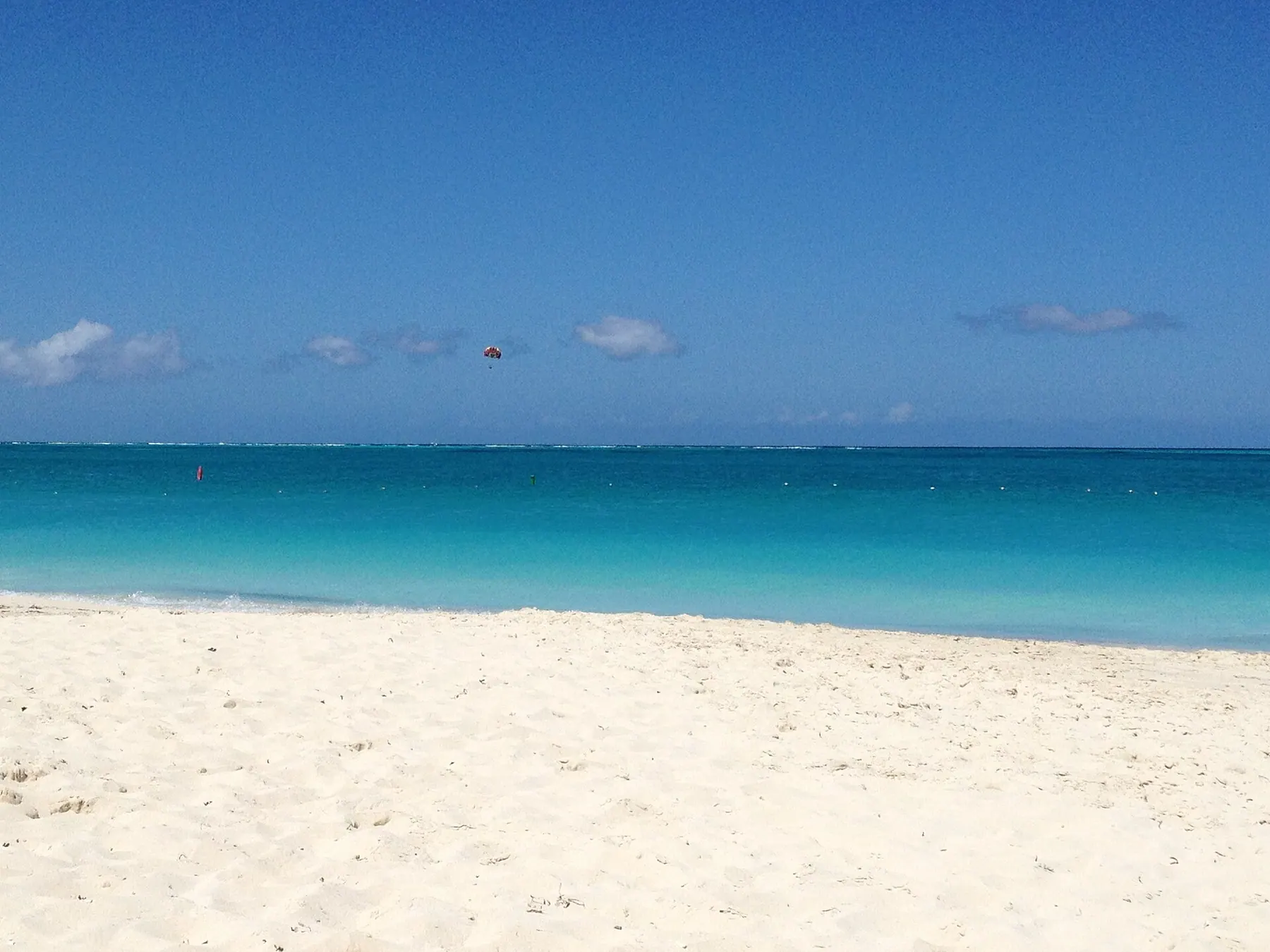
Diving in Turks and Caicos is possible year-round. For most first-time visitors the islands' tourism board suggests February to April, citing weather, price and availability. Wall, boat, liveaboard and reef diving are all on offer.
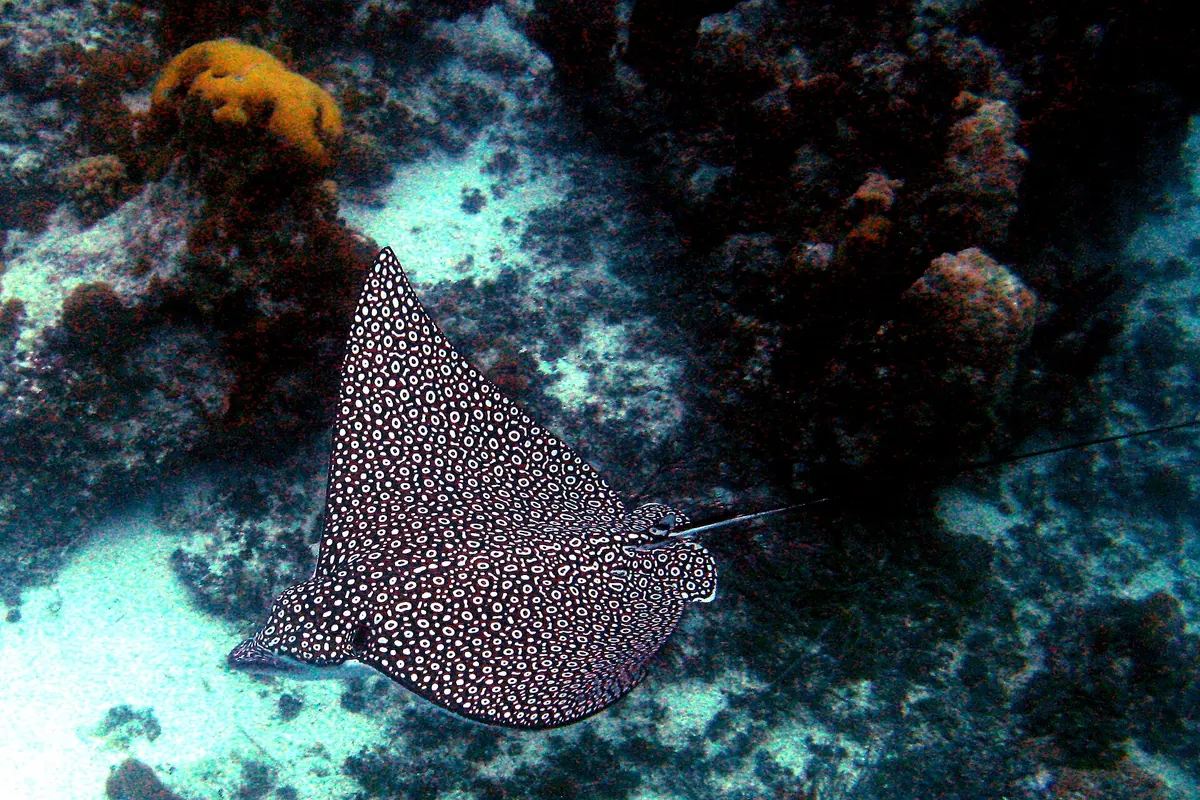
All common sea animals are present year-round, while whales and, to a lesser degree, larger sharks are seasonal. Humpback whales are expected from January to April at Grand Turk and Salt Cay, and tours cannot guarantee sightings. Nurse sharks are more common at French Cay and West Caicos than at Grand Turk. Eagle rays often come close at Eagle Ray Alley and The Crack, which has a typical depth of 30 m (98 ft). Caribbean reef sharks cruise the walls off Northwest Point.
The Department of Environment and Coastal Resources asks visitors not to touch, stand on or kick coral, and not to feed wildlife. In the swim zone, people stay within 300 ft of shore.
January to April is the dry season, and August to December is the rainy season, with May also wetter. Atlantic hurricane season runs from 1 June to 30 November, and mid-August through September is the most likely time for a strike. Late summer is generally the calmest weather with the best visibility. Water averages 25.5 °C (78 °F) in February and March and 29.1 °C (84 °F) in September.
Summary drafted with AI from the sourced facts below; not yet reviewed by John R. Each figure here appears, with its source, further down the page.
Not yet checked by a person. Each fact shows its source: an official page, or a dive operator's or magazine's report where it says so. Rules and fees change: check with the authority and your dive operator before you go. In an emergency: DAN hotlines. How we check facts. Spotted a mistake? corrections@divehomebase.com.
- Sea temperature
- 25.5–29.1 °C / 78–84 °F
- NOAA OISST, monthly average 1991–2020
- Recompression chamber
- Associated Medical Practices, Leeward Highway, Providenciales (clinic equipped for hyperbaric treatment of decompression sickness)
- Visit Turks and Caicos Islands (tourist board listing), read 2026-11-20
Sea temperature by month
Average sea surface temperature near Turks and Caicos, 1991–2020. Deeper water and bays can be cooler. Best months for diving depend on more than temperature; we add them when a published source gives them.
- Jan25.7 °C / 78 °F
- Feb25.5 °C / 78 °F
- Mar25.5 °C / 78 °F
- Apr26.1 °C / 79 °F
- May26.9 °C / 80 °F
- Jun28.0 °C / 82 °F
- Jul28.5 °C / 83 °F
- Aug28.8 °C / 84 °F
- Sep29.1 °C / 84 °F
- Oct28.8 °C / 84 °F
- Nov27.7 °C / 82 °F
- Dec26.5 °C / 80 °F
Rules for divers
Set by the park or national authority. Breaking them can mean fines or losing your dive permit.
- Do not touch, stand on or kick coral; do not feed wildlife; swim within 300 ft of shore in the swim zone1
- TCI Dept of Environment and Coastal Resources (DECR), read 2026-11-22
Marine life and conservation
Most often reported: humpback whale (Jan–Apr), nurse shark.
Sightings are likelihoods, not promises.
- Humpback whale: January to April (Grand Turk, Salt Cay); tours cannot guarantee sightings (regularly seen: Jan–Apr)1
- All common sea animals year-round; whales and, to a lesser degree, larger sharks are seasonal (reported: all year)2
- Nurse sharks seen; more common at French Cay and West Caicos than Grand Turk3
- Turks and Caicos Tourism (VisitTCI), read 2026-11-22
- Turks and Caicos Tourism (VisitTCI), read 2026-11-22
- Scuba Diving magazine, read 2026-11-22 · operator or magazine report
When to go
Best months: February to April for most first-time visitors.
Seasons are averages: weather in any one year can differ. Storm seasons come from the national or regional weather agency.
- Best months: February to April for most first-time visitors (weather, price, availability); diving is possible year-round1
- Atlantic hurricane season, 1 June to 30 November2
- Hurricane season: Mid-August through September is the most likely time for a hurricane strike1
- Dry season January to April; rainy season August to December (May also wetter)1
- Wind and sea: Late summer generally calmest weather and best visibility, but it is hurricane season (Jul–Sep)3
- Turks and Caicos Tourism (VisitTCI), read 2026-11-22
- NOAA National Hurricane Center, read 2026-11-22
- Turks and Caicos Tourism (VisitTCI), read 2026-11-22
Snorkelling and learning
- Snorkelling: Partly; marine national parks (West Caicos, Northwest Point) cited for snorkelling, mostly by boat1
- Scuba Diving magazine, read 2026-11-22 · operator or magazine report
Getting there
Fly to Providenciales International Airport.
- Nearest airport: Providenciales International Airport (PLS), receives nearly all international flights1
- Route: Fly to Providenciales (PLS), then a domestic flight to Grand Turk (about 30 min); no public ferry from Grand Turk except to Salt Cay2
- Turks and Caicos Tourism (VisitTCI), read 2026-11-22
- Turks and Caicos Tourism (VisitTCI), read 2026-11-22
Conditions
- Best months: February to April for most first-time visitors (weather, price, availability); diving is possible year-round1
- Diving: Wall, boat, liveaboard, reef2
- Turks and Caicos Tourism (VisitTCI), read 2026-11-22
- Turks and Caicos Tourism, read 2026-11-22 · read through a summary
Turks and Caicos in pictures

Dive sites
Eagle Ray Alley
- Eagle rays often come close at Eagle Ray Alley; also The Crack1
Northwest Point
- Caribbean reef sharks cruise the walls, often in the shallows off Northwest Point1
- Scuba Diving magazine, read 2026-11-22 · operator or magazine report
Questions about diving in Turks and Caicos
When is the best time to dive in Turks and Caicos?
Diving is possible year-round. The tourism board suggests February to April for most first-time visitors, citing weather, price and availability.
When can you see humpback whales in Turks and Caicos?
The tourism board lists January to April at Grand Turk and Salt Cay. Tours cannot guarantee sightings.
When is hurricane season in Turks and Caicos?
Atlantic hurricane season runs from 1 June to 30 November. The tourism board says mid-August through September is the most likely time for a hurricane strike.
How do you get to Grand Turk?
Fly to Providenciales, which receives nearly all international flights, then take a domestic flight of about 30 minutes. There is no public ferry from Grand Turk except to Salt Cay.
Not found yet: what it costs, an official diving level. We add facts once there is an official or published source. See every dive destination, or read about diving safety and how the site is paid for.